
Skip to content
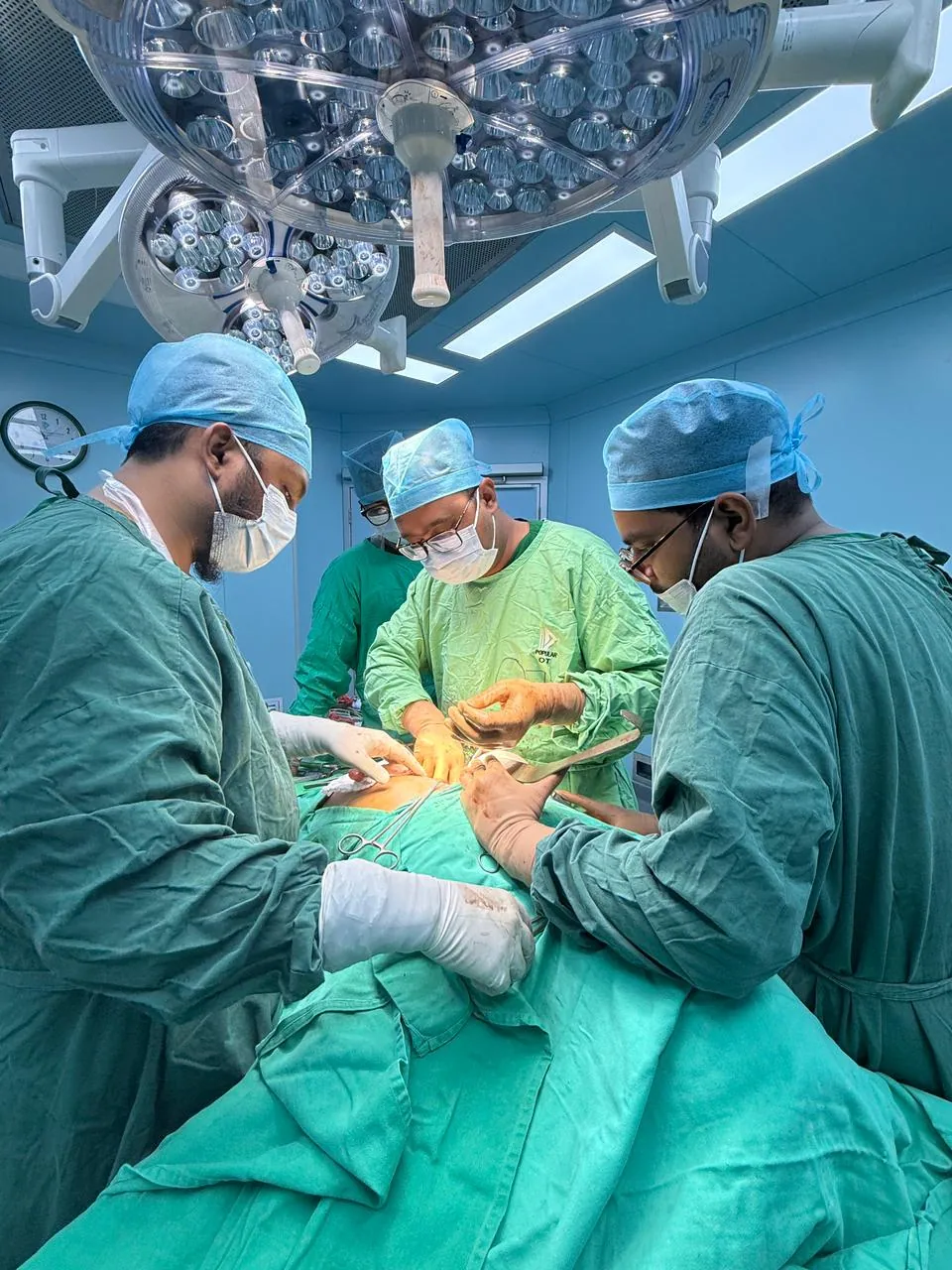
    Hepaticojejunostomy bile-duct reconstruction — Dr. Arefin's OT in Dhaka

    Biliary Surgery

    Bile Duct Obstruction Surgery Dhaka

    Bile duct obstruction blocks the flow of bile from the liver to the intestine, causing jaundice, itching, dark urine, and pale stools. Dr. Murshidul Arefin performs the full range of bile-duct reconstructions — stricture repair, hepaticojejunostomy, and complex re-do biliary surgery — at Popular Medical College Hospital, Dhanmondi.

    Causes of bile duct obstruction

    • Benign strictures — usually post-cholecystectomy bile-duct injuries (most common in Bangladesh)
    • Bile-duct stones (choledocholithiasis) — managed by ERCP or open exploration
    • Cholangiocarcinoma — see bile-duct cancer surgery
    • Pancreatic head tumours — managed by Whipple procedure
    • Choledochal cysts and primary sclerosing cholangitis

    Diagnosis and pre-operative planning

    Patients present with painless jaundice, itching, and weight loss. Workup includes liver-function tests, tumour markers (CA 19-9, CEA), and high-quality cross-sectional imaging — MRCP for the biliary tree and contrast CT for vascular planning. ERCP is reserved for therapeutic decompression. Dr. Arefin reviews every imaging study personally and discusses complex cases in multidisciplinary meetings before surgery.

    Surgical reconstruction techniques

    The standard reconstruction for benign strictures and post-cholecystectomy injuries is Roux-en-Y hepaticojejunostomy — a tension-free, mucosa-to-mucosa anastomosis between healthy bile duct above the stricture and a defunctionalised loop of jejunum. For high (Bismuth type III–IV) strictures, separate left and right hepatic duct anastomoses are constructed. Dr. Arefin uses fine 5/0 PDS sutures, optical magnification, and meticulous technique to achieve patency rates >90% at 5 years.

    Recovery and long-term outcomes

    Hospital stay is typically 7–10 days. Drains are removed once bile leak is excluded (usually day 5–7). Patients return to normal activities in 4–6 weeks. Long-term follow-up with liver function tests every 6 months is essential — recurrent stricture or cholangitis can occur in 5–10% and is managed with percutaneous balloon dilatation or revision surgery. Book a consultation to discuss your imaging.

    Frequently asked

    Common Questions

    Need expert advice?

    Dr. Murshidul Arefin consults at Popular Medical College Hospital, Dhanmondi. Book online or call to discuss your case.