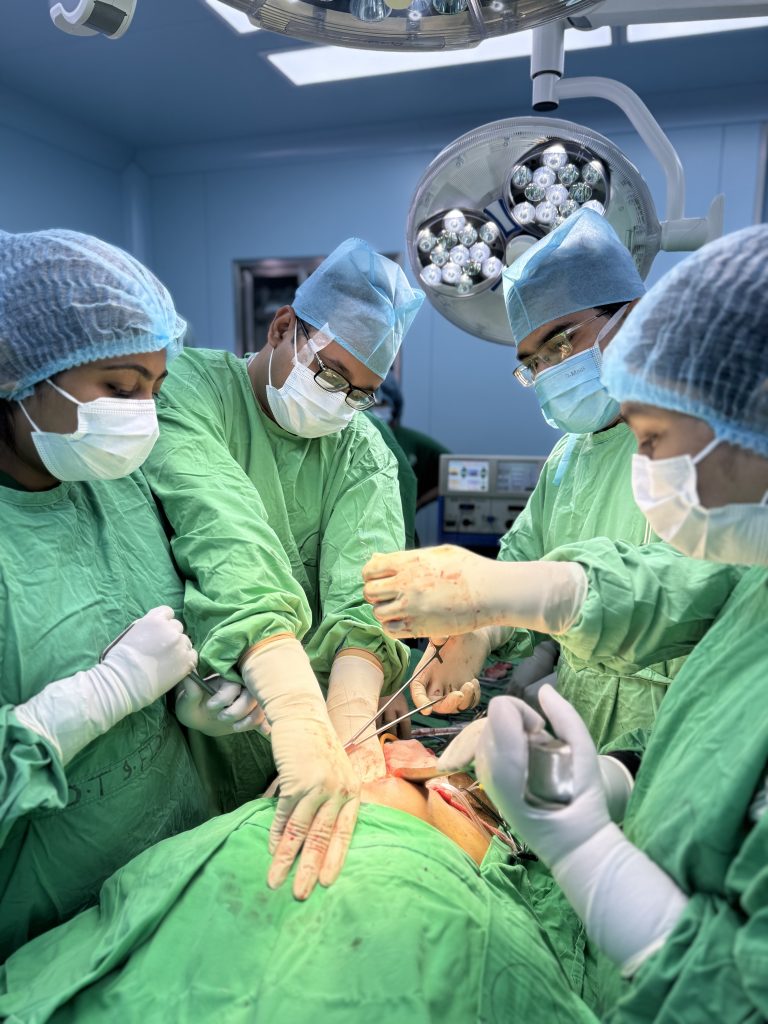
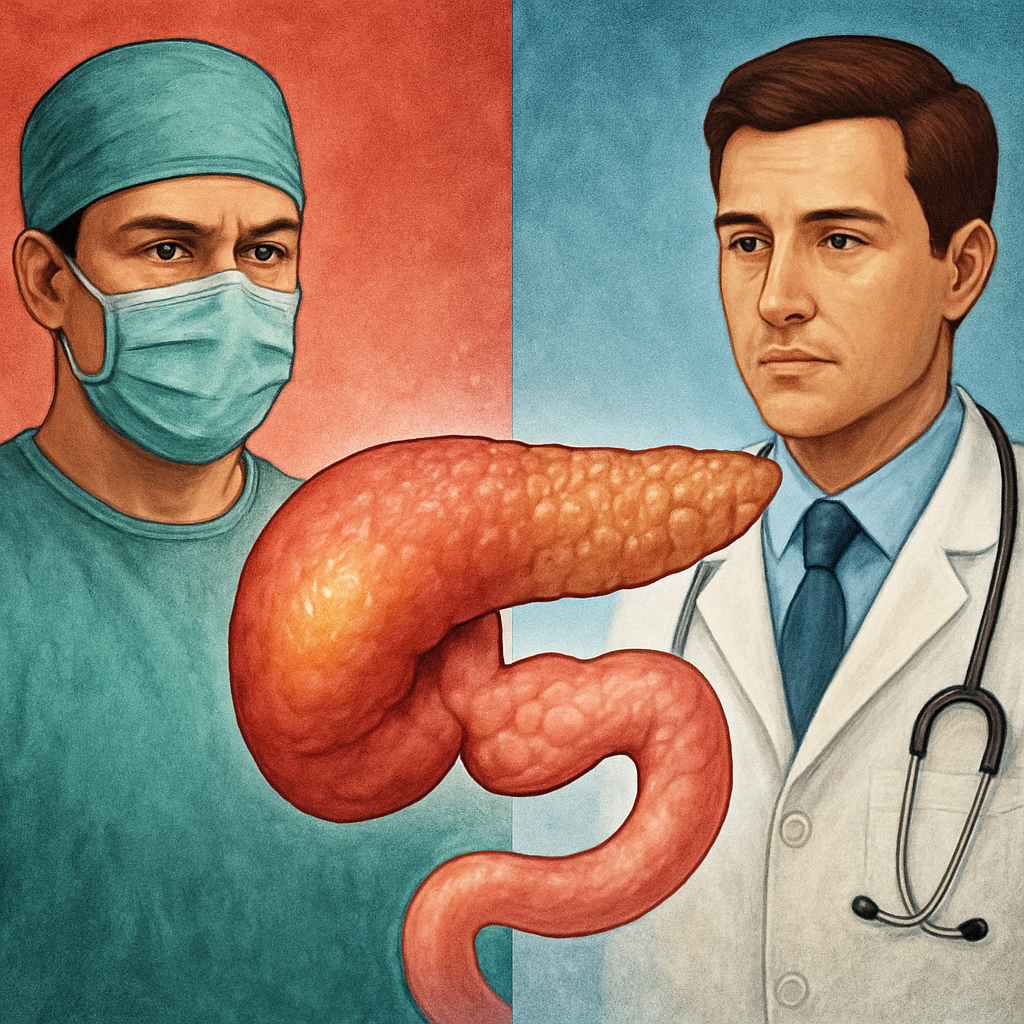
Acute pancreatitis and chronic pancreatitis present differently, and the choice between medical management and surgery changes outcomes. This article contrasts the two, explains the medical versus surgical pathways, and lays out a Dhaka-centric plan to access care from a pancreatitis specialist doctor in bangladesh. You’ll learn how imaging, symptoms, and duct anatomy guide the decision, and what to expect when seeking care at Popular Medical College Hospital with Dr Arefin.
1. Acute Pancreatitis: When a Surgeon Might Be Needed
In acute pancreatitis, the default is medical care—intravenous fluids, pain control, and early nutrition. A surgeon becomes relevant only when complications emerge or when escalation to a drain, endoscopic procedure, or debridement is necessary. In Dhaka, engaging a pancreatitis specialist doctor in Bangladesh early helps map whether you stay with medical management or move toward a procedural intervention, ideally coordinated with a hepatobiliary surgeon like Dr Arefin at Popular Medical College Hospital.
Key point: Early specialist input matters because imaging and clinical course often diverge from textbook timelines. Decisions hinge on infection, ductal anatomy, and patient stability. For Dhaka residents, the practical pathway starts with a consultation through local clinics toward a multidisciplinary team led by a pancreatitis specialist doctor in Bangladesh and, when needed, a surgeon. See When to See a Hepatology Doctor: Key Signs & Symptoms and Understanding Hepatobiliary Diseases: A Comprehensive Overview.
- Indications for intervention in acute pancreatitis: infected necrosis, persistent biliary obstruction from gallstones, symptomatic or infected pancreatic pseudocysts, and failure to improve with aggressive medical therapy.
- Timing considerations: stable, mild cases from biliary etiology may benefit from early cholecystectomy after initial stabilization; severe disease or organ failure warrants delaying definitive intervention until patient physiology improves.
- Approaches: minimally invasive necrosectomy, percutaneous drainage, and endoscopic drainage as bridges to or in lieu of open surgery when appropriate.
Imaging guides the decision: contrast-enhanced CT, MRI/MRCP, and EUS characterize necrosis, ductal dilation, and pseudocysts. In Dhaka, a pancreatitis specialist doctor coordinates with radiology to determine if drainage alone can control infection or if surgical or debridement becomes necessary. For reference, see overviews of pancreatitis imaging and management from international sources linked here: Mayo Clinic pancreatitis information and NIDDK acute pancreatitis.
Example: A 52-year-old man with gallstone pancreatitis develops fever and imaging shows walled-off necrosis with signs of infection. He is started on fluids and antibiotics, and interventional radiology places a percutaneous drain. When infection recurs despite drainage, Dr Arefin performs a minimally invasive necrosectomy to remove dead tissue, avoiding a prolonged open operation.
Trade-off: Early surgical or endoscopic intervention can shorten infection clearance but carries risks in unstable patients. Delaying until stabilization reduces operative risk but may allow infection or ductal obstruction to progress. In Dhaka, access to multidisciplinary teams—gasroenterology, radiology, and surgery—matters because such coordination determines whether a bridge procedure suffices or definitive debridement is needed.
Takeaway: The best outcomes come from early, local coordination with a pancreatitis specialist doctor in Bangladesh. If surgery is anticipated, lean on minimally invasive options and a clear, patient-centered plan coordinated with Dr Arefin to minimize recovery time and preserve pancreatic function.
2. Chronic Pancreatitis: Surgical Options When Medical Therapy Fails
Chronic pancreatitis often starts with medical management, but many patients reach a point where surgery becomes the most reliable path to durable pain relief and duct drainage. Medical therapy remains essential, yet its effectiveness wanes when there is ongoing ductal obstruction or head disease. At that stage, evaluation by a pancreatitis specialist doctor in Bangladesh is standard, with surgical options coordinated by a hepatobiliary surgeon such as Dr Arefin in Dhaka.
Surgical options for chronic pancreatitis
In practice, the surgeon considers duct size, head involvement, and prior endoscopic attempts. When the main duct is significantly dilated and pain comes from poor drainage, a drainage oriented operation is preferred. When disease centers in the head or there is inflammation in that area, head preserving resections may be more appropriate.
- Puestow or Partington-Rochelle pancreaticojejunostomy is indicated when the main pancreatic duct is dilated and stones block drainage; it aims to channel pancreatic secretions into the small intestine to relieve pain while preserving most of the gland. The trade-off is that it does not address a prominent head mass and may not be suitable if head inflammation dominates.
- Frey procedure combines a limited resection of the pancreatic head with a lateral pancreaticojejunostomy; indicated for a dilated duct with head enlargement. It provides durable drainage and pain relief while sparing much of the pancreatic tissue, but the operation is longer and technically demanding.
- Beger procedure (duodenum-preserving pancreatic head resection) removes diseased head tissue while maintaining the duodenum and part of the stomach, indicated when head driven disease is dominant. It can provide strong pain relief and improve drainage, yet it carries higher complexity and a risk of endocrine insufficiency if many glands are affected.
Endoscopic drainage and stone extraction can bridge to surgery when initial attempts reduce pain and decompress the duct, but it is not a permanent cure for all patients with chronic pancreatitis. In many cases a planned surgical step after a period of optimization yields better long term outcomes.
Real world example: In Dhaka, a patient with chronic pancreatitis and a dilated main pancreatic duct after prolonged medical therapy underwent a Frey procedure at Popular Medical College Hospital following two unsuccessful endoscopic drainage attempts. Pain improved over the next several weeks and the patient returned to light work within two months.
Imaging guides the plan. Contrast enhanced CT or MRI with MRCP maps duct size and head anatomy, while endoscopic ultrasound can assess masses and access pseudocysts. These findings help decide between a drainage oriented operation and head preserving resection. See broader guidance on imaging for pancreatitis in trusted sources Mayo Clinic or NIDDK.
Takeaway: If chronic pancreatitis persists despite medical therapy, schedule a consultation with a pancreatitis specialist doctor in Bangladesh to review imaging, discuss surgical options, and plan a tailored path with Dr Arefin in Dhaka.
3. Diagnostic Pathway: Imaging and Tests That Guide the Decision
Imaging is the decision driver in pancreatitis care. In Dhaka, the path from first contact to treatment hinges on how clearly we map anatomy, ductal status, and collections. A pancreatitis specialist doctor in Bangladesh coordinates radiology, gastroenterology, and surgery to turn scans into a concrete plan, not a guessing game.
The imaging triad—contrast-enhanced CT, MRI with MRCP, and endoscopic ultrasound (EUS)—tells you what to do next. CT quickly flags necrosis or infection; MRI/MRCP defines ductal anatomy and guides drainage decisions; EUS combines high-resolution imaging with potential drainage or biopsy when interventions are on the table. See standard references for how imaging informs care in pancreatitis: contrast-enhanced CT and MRI/MRCP considerations.
Imaging modalities and decision points
CT is typically first-line in acute pancreatitis to stage severity and identify complications; if necrosis is present and infection is suspected or persistent collections exist, a pancreatobiliary team decides between percutaneous drainage, minimally invasive necrosectomy, or surgical intervention.
MRI/MRCP excels at mapping the pancreatic duct and differentiating pseudocysts from fluid spaces, which shifts the balance toward endoscopic drainage or surgical planning depending on ductal communication.
EUS acts as the bridge to intervention. It can guide drainage of selected fluid collections and provide targeted biopsy, helping avoid surgery when nonoperative management suffices.
Laboratory evaluation complements imaging: amylase and lipase quantify inflammation; bilirubin and liver enzymes flag biliary obstruction; metabolic panels screen for diabetes risk and nutritional status that influence treatment choices.
Concrete example: A 58-year-old patient in Dhaka presents with sudden upper abdominal pain. CT shows peripancreatic fluid and possible early necrosis. MRI/MRCP clarifies ductal status, revealing no ductal obstruction, and EUS-guided drainage is not immediately required. The team starts with fluids and nutrition support, monitors, and reserves invasive intervention for failure of conservative care or infection.
Limitations and trade-offs: CT is fast and accessible but exposes patients to radiation; MRI provides detail yet may face scheduling delays or claustrophobia; EUS requires specialized operators and may necessitate transfer to a tertiary center. In practice, Bangladesh-based care depends on coordinating imaging across Dhaka facilities and a pancreatitis specialist doctor in Bangladesh to translate findings into a timely plan with Dr Arefin.
4. Pancreatitis Specialist Doctor in Bangladesh: Why Local Expertise Matters
Local expertise matters because it accelerates decision-making and aligns care with local realities—costs, insurance, travel, and hospital workflows. A pancreatitis specialist doctor in Bangladesh who anchors a multidisciplinary team in Dhaka can orchestrate imaging, labs, nutrition, and follow-up without forcing patients into long journeys. In practice, that means faster access to CT or MRI, a coordinated plan for medical management or timely intervention, and a care pathway that fits the local health system and the patient’s financial constraints.
Proximity and language are not cosmetic benefits. They enable clear consent, easier symptom reporting, and better adherence to postoperative instructions. In Dhaka, a center like Popular Medical College Hospital houses gastroenterology, radiology, surgery, and nutrition under one roof, so decisions are discussed in real time and across disciplines. This is a practical advantage when a case shifts from medical management to a procedure. For readers seeking broader context on biliary and liver conditions, see When to See a Hepatology Doctor: Key Signs & Symptoms.
Concrete example: A 58-year-old patient presents with severe upper abdominal pain after a gallstone attack. The local pancreatitis specialist doctor in Bangladesh at Popular Medical College Hospital reviews the imaging, confirms biliary obstruction, and coordinates a prompt ERCP to relieve the obstruction while fluids and analgesia are optimized. The team then plans definitive cholecystectomy after stabilization. This local pathway avoids transfers, reduces delays, and keeps the patient within a coordinated care framework.
Tradeoffs and limits: Local centers excel at timely management for common and moderately complex pancreatitis, but very high-risk scenarios—infected necrosis with organ failure or unusual ductal anatomy—may require referral to higher-volume pancreatobiliary centers or remote consultation. The prudent approach is a local plan with a clear exit strategy for escalation, ensuring access to advanced imaging, endoscopic methods, and a multidisciplinary rounds process that characterizes true local expertise.
Consultation pathway and expectations: When you reach a Dhaka pancreatitis clinic, you should anticipate a thorough history, a focused exam, and an integrated plan that may start with optimized medical therapy, followed by targeted imaging and, if indicated, procedures arranged by a cohesive team. A local expert will typically marshal gastroenterology, radiology, surgery, and nutrition to align on timelines, which helps prevent last‑minute changes in strategy. For Dhaka residents, this proximity translates into practical advantages in scheduling and follow-up.
Takeaway: Local pancreatitis expertise in Dhaka matters because it translates into faster, coordinated care and more predictable outcomes. Start by scheduling a consultation with a pancreatitis specialist doctor in Bangladesh at Popular Medical College Hospital to validate your pathway and understand the next steps for imaging, tests, and potential intervention.
5. A Dhaka Pathway: Accessing Expert Care at Popular Medical College Hospital
Access to expert pancreatobiliary care in Dhaka starts with a formal referral to a pancreatitis specialist doctor in Bangladesh who coordinates a multidisciplinary team at Popular Medical College Hospital. In this Dhaka pathway, Dr Arefin leads the surgical side while collaborating with gastroenterology, radiology, and nutrition to move you from evaluation to treatment on a realistic timeline. For readers seeking local context on hepatobiliary care, see Understanding Hepatobiliary Diseases: A Comprehensive Overview.
- Step 1: Referral and scheduling with Dr Arefin at Popular Medical College Hospital in Dhaka. Have your primary physician initiate the referral and request a pancreatitis consultation to confirm the care trajectory.
- Step 2: Pre-admission evaluation and baseline workup. Complete labs, imaging reviews, nutrition assessment, and medication reconciliation to optimize before any procedure.
- Step 3: Diagnostic imaging to define anatomy. CT or MRI/MRCP and, when indicated, endoscopic ultrasound (EUS) to assess ductal dilation, necrosis, and pseudocysts; results guide whether medical, endoscopic, or surgical steps are needed.
- Step 4: Treatment planning: medical vs surgical options. Your team will discuss medically managed pathways and, if indicated, named procedures such as Puestow/Partington-Rochelle, Frey, Beger, or duodenum-preserving head resections, plus potential endoscopic bridges. The aim is relief of pain, drainage optimization, and function preservation.
- Step 5: Admission and procedures if indicated. Expect coordinated care within a multidisciplinary setting. Minimally invasive approaches are prioritized when feasible, with a clear plan for intraoperative decisions and anesthesia.
- Step 6: Postoperative recovery and follow-up. You’ll receive nutrition guidance, enzyme support if needed, diabetes monitoring, and structured follow-up with both the pancreatitis specialist and surgeon to track recovery.
Concrete example: A 52-year-old man with chronic pancreatitis and a dilated pancreatic duct visits Popular Medical College Hospital. After imaging confirms ductal obstruction, Dr Arefin discusses options and proceeds with a Frey procedure. Recovery spans several weeks, with meaningful pain relief and improved digestion as the pathway progresses through rehabilitation and nutrition adjustments.
What to bring and how costs unfold are part of the early discussion. When you arrive, bring key documents and be prepared for a clear estimate of the treatment plan. The Dhaka-based pathway emphasizes local access, so you can expect streamlined imaging, anesthesia, and nutrition services within one campus.
- Referral letter and any prior imaging or surgical notes
- Identity documents and valid insurance information (if applicable)
- Recent CT/MRI reports and any endoscopy results
- A concise symptom diary, current medications, and known allergies
- Questions you want answered about procedures, recovery, and timelines
Your next step is to book a consultation with Dr Arefin to begin the Dhaka pathway and access expert care locally.
6. Practical Guidance for Patients: Questions, Planning, and Next Steps
Practical care starts with a concrete, patient-centered plan. In Dhaka, a pancreatitis specialist doctor in Bangladesh coordinates with a multidisciplinary team at Popular Medical College Hospital, led by Dr Arefin. Expect a fast, clear pathway from initial evaluation to a tailored plan that weighs medical management against surgical or endoscopic options. Your first step is to understand who should lead your care, what tests you’ll need, and how decisions will be made in your local setting. For context on specialty guidance, see reputable overviews of when to involve a hepatobiliary or pancreatology expert When to See a Hepatology Doctor: Key Signs & Symptoms and general hepatobiliary disease discussions Understanding Hepatobiliary Diseases: A Comprehensive Overview.
- Key question to ask during the consultation: Is surgery or an endoscopic procedure likely to reduce your pain and improve drainage, and what are the realistic timelines and risks?
- What tests will be required and why: Which imaging studies or labs will influence the plan, and how quickly can results be acted on?
- What is the expected care pathway: Will you start with medical management, or should you anticipate a procedure or surgery in the near term?
- Costs, coverage, and local logistics: What will be billed, what insurance covers, and where can you get transparent information in Dhaka?
Documentation to bring can accelerate decisions. Gather recent imaging studies, lab reports, a list of current medications and allergies, and any prior hospital discharge summaries. If you have records from other hospitals in Dhaka or surrounding districts, bring them as well. Having this material ready helps the pancreatitis specialist doctor in Bangladesh map the shortest, safest route to treatment. See how multidisciplinary teams assemble care plans in practice and what to expect in a first formal evaluation.
During the visit you may discuss several tests and timelines. You might undergo contrast-enhanced CT or MRI/MRCP to map ductal anatomy, and an endoscopic ultrasound (EUS) if a detailed view is needed. Lab work typically includes amylase and lipase, bilirubin, liver enzymes, and a metabolic panel. Imaging findings are weighed against symptoms to decide whether conservative management suffices or a procedural path is warranted. For broader context on imaging-driven decisions, refer to established pancreatitis resources such as the Mayo Clinic overview.
Example: A 52-year-old with recurrent epigastric pain underwent an integrated evaluation with Dr Arefin. After imaging confirmed a dilated pancreatic duct and persistent symptoms, the team started with enzyme therapy and pain control, then scheduled a Frey procedure as a planned next step. This approach minimized hospital stays and preserved pancreatic function while aligning with local capabilities in Dhaka.
Next steps: Schedule a consultation with a pancreatitis specialist doctor in Bangladesh to map your personalized care plan. Bring your records, ask for a written timeline, and confirm what to expect for tests, procedures, and recovery. If you’re in Dhaka, start with Dr Arefin’s team at Popular Medical College Hospital and coordinate through local, trusted channels to keep the plan moving.
Related Articles

Is Bangladesh Ready for Liver Transplant? A Surgeon’s Honest Assessment of What’s Possible Today
Is Bangladesh Ready for Liver Transplant? A Surgeon’s Honest Assessment of What’s Possible Today This article offers a surgeon's candid […]
Read More
Gallbladder Stone Surgery in Bangladesh: What It Really Costs and What Affects the Price
Gallbladder Stone Surgery in Bangladesh: What It Really Costs and What Affects the Price If you're weighing gallbladder surgery in […]
Read More
Your Most Pressing Questions About Liver, Gallbladder, and Pancreas Surgery — Answered by a Specialist
Your Most Pressing Questions About Liver, Gallbladder, and Pancreas Surgery — Answered by a Specialist Patients in Dhaka facing surgery […]
Read More