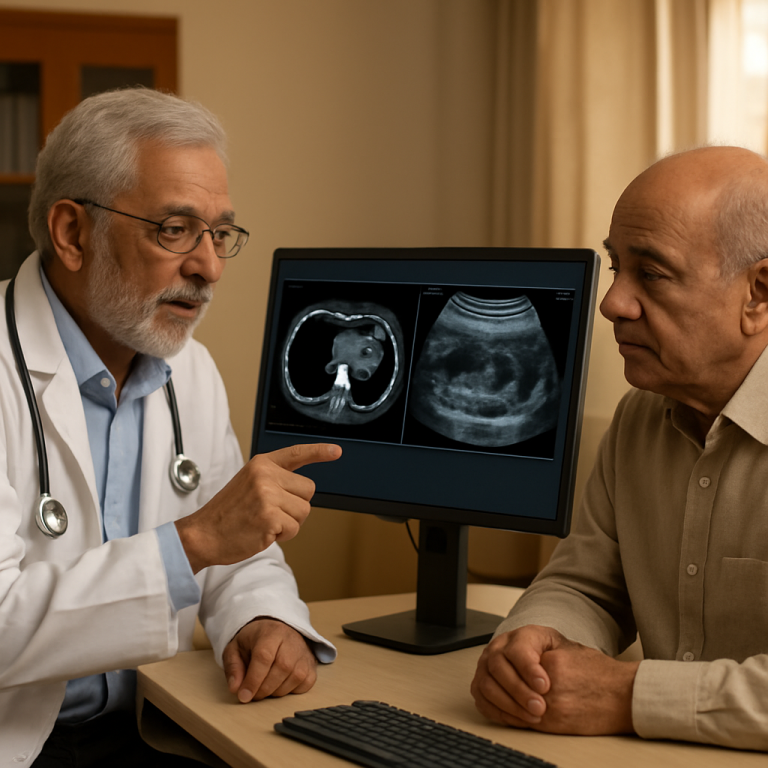

Surgical Decision Making Training Through Case Drills
Most trainees who get into trouble in hepatobiliary work do not have clumsy hands, they have an unexamined plan.

Why Judgement Fails More Often Than Technique
Technique is the part of surgery that gets practised, because it is visible and it can be corrected on the spot. Judgement is the part that gets assumed. Surgical decision making training exists to close that gap, and it starts by naming the failures honestly. Deciding from a radiology report instead of the images. Anchoring on the first diagnosis somebody wrote in the notes. Reading a scan that looks resectable and concluding that the patient in front of you is operable.
However, none of those are knowledge gaps. What they have not built is a habit of stating a decision out loud, with reasons, early enough for somebody senior to challenge the reasoning rather than the result.
Key Takeaways on Surgical Decision Making Drills:
- Judgement is a trainable skill, and most avoidable harm in hepatobiliary work follows a flawed plan rather than flawed hands.
- Drills use real anonymised cases with information released in stages, so you commit to a decision before the next fact arrives.
- Imaging is read directly by the trainee, because a report tells you what somebody else noticed, not what you can see.
- Scores such as ALBI, Child-Turcotte-Pugh and MELD are treated as flags that prompt a rethink, never as verdicts that decide an operation.
- Deciding not to operate is drilled as a skill in its own right, including the conversation that has to follow it.
How a Drill Session Actually Runs
A session in the surgical mentorship programme works through real hepatobiliary cases, anonymised and stripped of identifying detail, with the information released in stages. You state what you think is going on and what you would ask for next, and that answer is written down. Then the bloods arrive, then the imaging, then the operative findings, and at each stage you commit again before anything further is revealed.
Nobody scores points for landing on the answer that turns out to be right for the wrong reason. In this kind of HPB case discussion the reasoning is the assessed object, so a trainee who reaches the correct operation by luck and a trainee who reaches a defensible wrong answer by careful thought get very different feedback. In addition to the case itself, each drill closes with a short written record of what you decided and why, which sits in your trainee file alongside the baseline assessment.
A Trainee’s Experience
A postgraduate trainee in Dhaka, two years into a general surgical post, arrived confident about a case he had seen on a previous unit: a right-sided liver lesion he was sure should come out.
In the drill he was asked to hold that plan and answer two questions first. What was the remnant volume on the scan in front of him, and what had the bilirubin done over the past ten days. When he worked through the images himself rather than the report, the lesion sat closer to the confluence than he remembered, and the bilirubin was climbing rather than settling. He revised his own plan to drainage and reassessment before any resection, and said afterwards that the uncomfortable part was not being corrected, it was realising he had been about to argue for an operation he could not justify. No patient outcome is claimed here, the case was used for teaching only, and the drills were run in Dhanmondi.

Reading the Imaging Before Deciding Anything
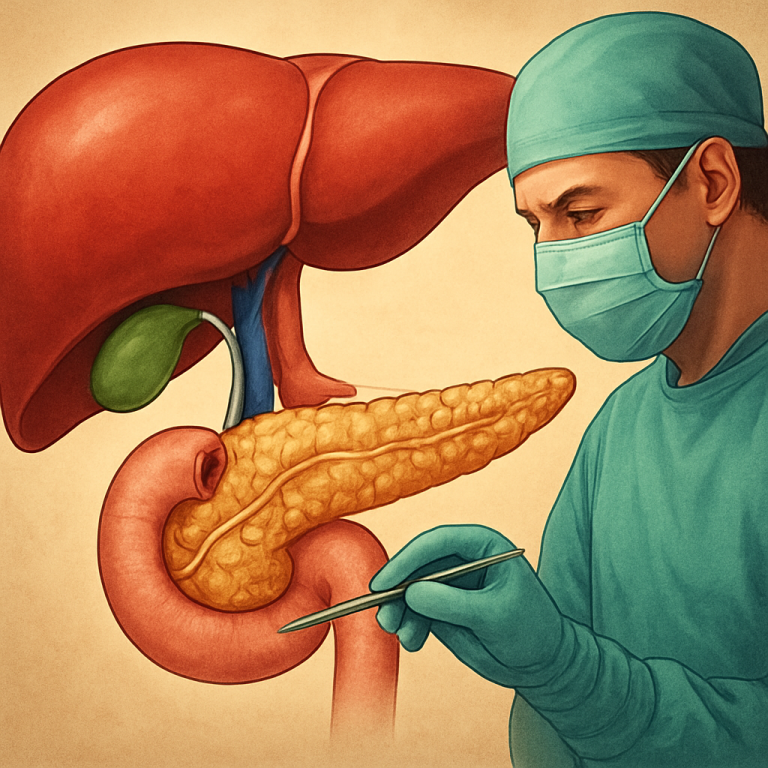
The first rule in every drill is that you open the images yourself, and check the basics before forming an opinion: which sequences exist, whether the contrast phases are timed properly, and whether the study covers the whole liver and the whole pancreas rather than stopping short.
Then you follow structures rather than arrows. Follow the portal vein, the hepatic artery and its variants, and the hepatic veins to the cava. In addition to that, you are expected to say plainly what the study does not show, because an honest gap changes a plan more usefully than a confident guess. Volumetry gets a short mention in drills and a long one on the complex hepatic resection page. Furthermore, if an MRCP is needed and has not been done, the correct answer in the drill is to ask for it rather than to operate on a maybe.
Weighing Patient Fitness Against the Operation
A scan can look operable while the patient is not, and this is where surgical decision making training earns its place. What matters is the combination: bilirubin and its trend, albumin, platelet count and the hints of portal hypertension that come with a low one, performance status described in what the person can actually do, cardiac and respiratory reserve, diabetes control, renal function, and nutritional state.
Scores come into the drill as flags, not verdicts. However, none of them was built to authorise or refuse an operation for an individual, and a trainee who says the score allows it is asked to try again in his own words. The useful question is different: does this score make me want to look harder at something, and what would I check next. In control of that reasoning, a trainee can defend either operating or waiting. Moreover, a score that shifts the plan from an extended resection to a smaller one, or from surgery now to optimisation first, has done exactly the job it was designed for.
Choosing the Operation, and the Alternatives to It
Once the disease and the patient are described honestly, the drill moves to the plan. That means considering the full menu each time: a smaller anatomical resection instead of an extended one, drainage before any resection when the ducts are obstructed and the bilirubin is high, referral for oncological treatment before surgery where that sequence is standard, a staged approach when the future remnant is too small, and no operation at all when nothing on the list improves the patient’s situation.
Access is treated as a separate question from oncology, deliberately. In addition to the operative plan, each drill asks for the parts trainees usually skip: who else needs to see the patient before a decision is final, what the theatre and blood requirements are, and what the plan is if the first step fails. Furthermore, you are expected to name the point at which you would convert, stop, or close and reconsider, because that decision is far easier to make when it was described in advance.
Knowing When Not to Operate, and How to Say So
The hardest drill in the module is the one where the correct answer is to leave the abdomen closed. You are handed a case where the disease is too advanced, the liver function too poor, or the patient too frail for the operation that would otherwise be indicated, and you have to say so out loud, with your reasons, and then hold that position while it is challenged.
The conversation is drilled as well, because a decision nobody can explain to a family is a decision that gets reversed in a corridor. You say what surgery would achieve and, more importantly, what it would not. You describe what happens without an operation, including the symptoms that can still be treated, and you cover the options that remain: biliary drainage or stenting for jaundice, oncological referral, pain and nutrition support, and a second opinion if the family wants one. However, nothing in that script promises a cure. In addition to that, trainees are taught to write the reasoning in the notes on the same day, so the decision is documented while the facts are fresh.
Debrief and Reasoning Feedback
Every drill ends with a debrief, and the debrief separates the decision from the outcome. So the questions are consistent: what did you know when you decided, what did you infer rather than check, and which single piece of missing information would have changed your plan.
Feedback names the reasoning error rather than the person, which keeps the room usable. Furthermore, each debrief produces a short written note that goes into the trainee file next to the record of graded operative steps. Those notes are what the exit assessment compares against, so progress is measured against your own starting point rather than against the strongest person in the room.
What a Research-Active Supervisor Adds to a Case Drill
Drills lean on published evidence, so the ability to read a paper for its limits is part of the module. The programme is led by a surgeon who has published in the peer-reviewed literature, with three Cureus papers on the record, and the reading sessions use those papers as worked examples of honest reporting rather than as claims to authority.
One of them is a study of the ALBI score as a predictor of post-hepatectomy liver failure after liver resection, on which Dr. Arefin is a co-author rather than the first author. The overall complication rate was 42.9%. Post-hepatectomy liver failure occurred in 0.0% of ALBI grade 1 patients, 38.5% of grade 2, and 100% of grade 3. The area under the curve for ALBI was 0.659, with sensitivity 70.0% and specificity 62.5% at a cut-off of -2.67. An AUC of 0.659 is weak to moderate discrimination, and the study was single-centre with a small number of grade 3 patients, so the 100% figure rests on very few cases.
That is the teaching point. A score with weak to moderate discrimination is still worth knowing, because it tells you where to look harder, and it is not a permission slip. The full paper is available through its published record on the ALBI grade and post-hepatectomy liver failure, and trainees are expected to read the limitations section before quoting the results. Indexed records can be checked on PubMed.
“Clinical judgement is the ability to make considered clinical decisions and take appropriate action.”
Source: Clinical decision support system, Wikipedia
Where the Drills Run, in Dhanmondi
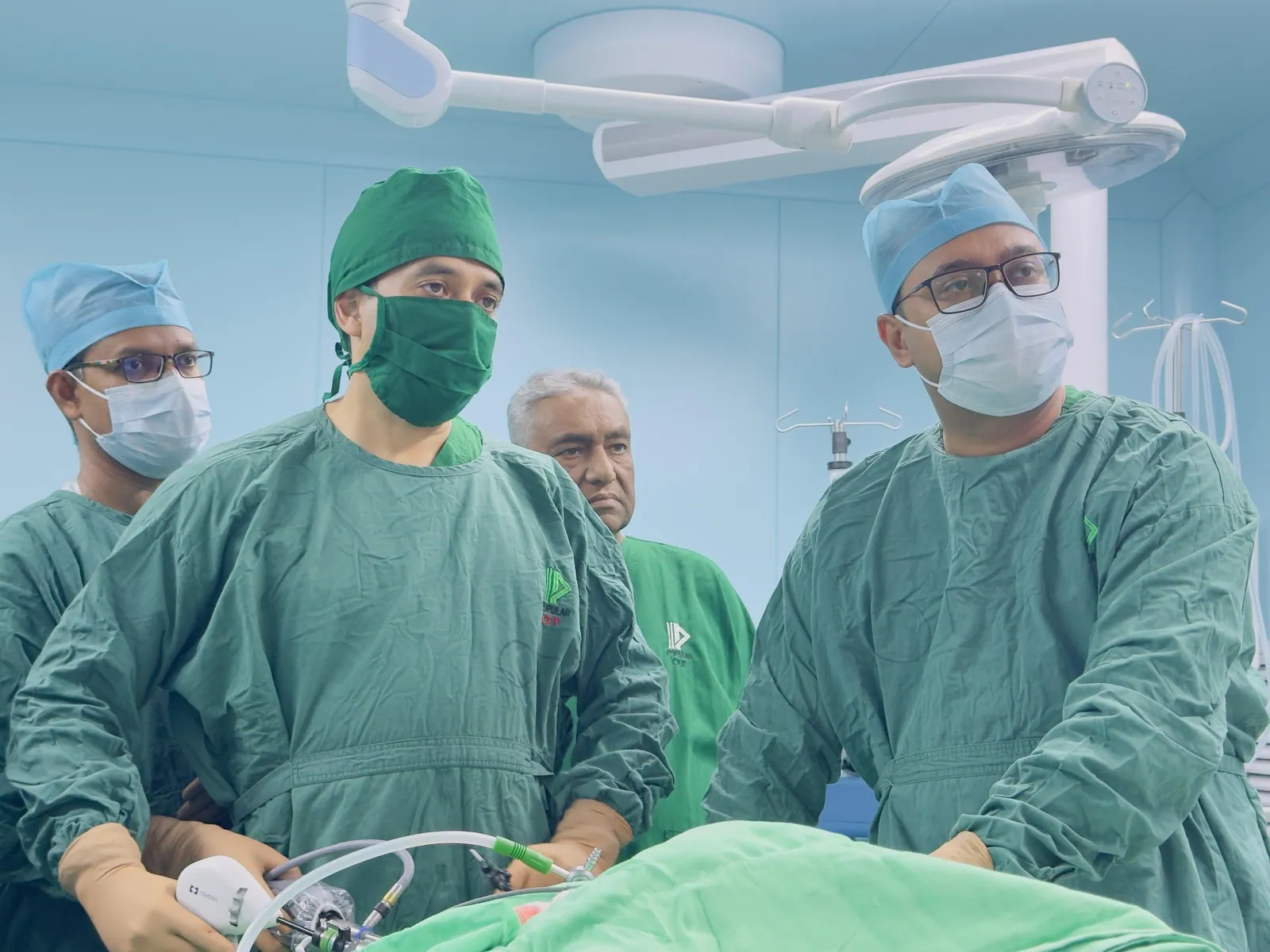
Drills sit inside a working service rather than in a rented classroom. The cases discussed are the cases that came through the hepatobiliary practice at Popular Medical College Hospital in Dhanmondi, Dhaka. Supervision comes from the same consultant throughout, so the feedback accumulates instead of resetting every few weeks.
Furthermore, the volume behind the case material is worth stating plainly: 7+ years of focused hepatobiliary experience, over 1,500 surgeries, 800+ laparoscopic cases, 300+ complex pancreatic and upper-GI cases and 200+ bile duct reconstructions. Those figures describe the environment the drills draw on, not a promise about your own results. Registration and postgraduate qualifications remain matters for the Bangladesh Medical and Dental Council and the Bangladesh College of Physicians and Surgeons. If you would rather see a session before committing, arrange a discussion in Dhanmondi.
Research-based practice: what Dr. Arefin has published
Dr. Murshidul Arefin is a research-active hepatobiliary surgeon, not only an operating one. He is a co-author of peer-reviewed, open-access Cureus work on the preoperative albumin-bilirubin score before liver resection, on the mean platelet volume to platelet ratio in pancreatic cancer and chronic pancreatitis, and on a case report of neuroendocrine tumour of the ampulla of Vater. Those papers are used in the drills as material to be read critically, including their limitations, rather than as authority to be quoted.
How to Join the Module
Send a short application. Your CV, current post, registration details, a note of the hepatobiliary cases you have assisted, and a paragraph on the decisions you find hardest. In addition, expect a conversation before a place is confirmed, because the drills work only if the group is roughly matched in experience. Call +880 1311 487 592 to Book an Appointment for that discussion.
Frequently Asked Questions
Do the drills replace time in theatre?
No. They rehearse reasoning so that your operative time teaches you more. Judgement still needs real cases, real supervision and the graded operative steps that go with them.
Do I need to bring my own cases?
Not at first. Trainees are encouraged to bring anonymised cases later, since presenting your own decision for scrutiny is the most useful version of the exercise.
Are the drills assessed?
Yes, on reasoning rather than on landing the right answer. Written notes go into your trainee file and feed the exit assessment.
Is this suitable for a surgeon already in practice?
Often yes, particularly for someone working without a hepatobiliary colleague to argue with. Say so in your application so the case mix can be pitched accordingly.
Programme led by Dr. Murshidul Arefin, MBBS, FCPS, MS in Hepatobiliary Surgery (BSMMU), hepatobiliary consultant at Popular Medical College Hospital, Dhanmondi, Dhaka, and a research-active surgeon published in Cureus.