Advanced hepatobiliary treatment Bangladesh patients trust in Dhaka
You may hold three referral slips from three Dhaka hospitals. Yet nobody has explained your liver, bile duct or pancreas problem. The problem is not your reports. Nobody has taken charge of the case.
Advanced Hepatobiliary Treatment Bangladesh Patients Can Actually Reach
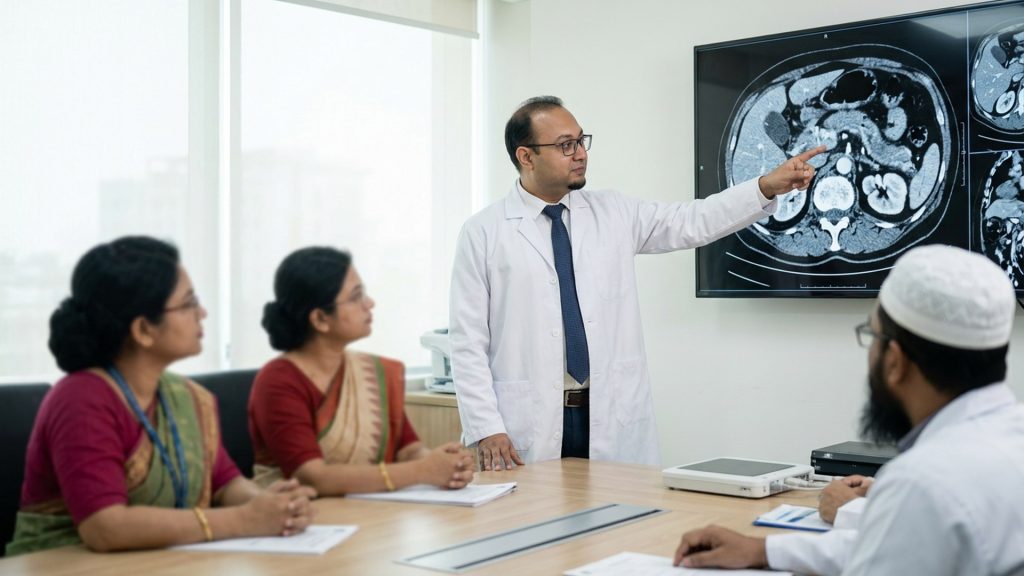
Furthermore, one department sends you to the next while your jaundice deepens. That shuffle is not a treatment plan, and families across Bangladesh lose weeks to it. Dr. Murshidul Arefin works in the opposite order. He reads your ultrasound, CT or MRCP first. He then writes the diagnosis down in plain language. Only after that does anyone discuss an operation. The record backs this up. Dr. Arefin holds a 5.0 rating across 42+ Google reviews. He has performed 800+ laparoscopic cases and consulted more than 10,000 patients. He brings 7+ years of focused hepatobiliary practice as Consultant at Popular Medical College Hospital, Dhanmondi, Dhaka.
Advanced hepatobiliary treatment Bangladesh patients can actually reach means one surgeon owns the liver, the biliary tree and the pancreas together. Those organs share one drainage system and one set of failure modes. However, that single-owner model stays rare here. Patients therefore arrive with a folder of scans and no decision. We reverse it: one review, one written plan, one named surgeon answerable for the outcome.
Key takeaways for hepatobiliary care in Dhaka:
- Dr. Murshidul Arefin brings 800+ laparoscopic cases and a 5.0 Google rating from 42+ reviews to liver, bile duct and pancreas care.
- Hepatobiliary surgery covers the liver, gallbladder, bile ducts and pancreas as one connected system rather than four separate complaints.
- Patients in Dhaka can reach advanced hepatobiliary treatment locally, with imaging review and a written plan before anyone books an operation.
- Yellow eyes, pale stool, dark urine, upper abdominal pain or unexplained weight loss are signs that need assessment, not waiting.
- We discuss costs, admission length and recovery time openly at consultation, so families can plan before they commit.
Which Liver, Bile Duct and Pancreas Conditions Need HPB Care
Moreover, the label “stomach problem” hides most of the conditions a liver pancreas biliary tract specialist treats every week. Gallstones, known locally as পিত্তথলির পাথর, sit at the common end of that list. Left alone, they can move into the bile duct, block drainage and inflame the pancreas. Further along the spectrum sit bile duct strictures, choledochal cysts, liver abscesses and liver tumours. Chronic pancreatitis, pancreatic cysts and periampullary tumours around the ampulla of Vater complete the list.
In addition, the same anatomy produces very different operations. A key-hole laparoscopic gallbladder removal takes a day or two in hospital. A pancreatic head resection is a major undertaking with weeks of recovery. Choosing between them is not a preference. It follows a reading of imaging, blood work, tumour markers and your general fitness. HPB surgery Bangladesh services earn the name only when the surgeon covers both ends of that range. That surgeon should also say honestly which end your reports point toward.
Symptoms That Should Not Wait in Dhaka: Jaundice, Pain and Weight Loss
Yellowing of the eyes or skin changes the urgency of a hepatobiliary case, because bile usually is not draining. Alongside it, watch for pale or clay-coloured stool, tea-coloured urine and itching without a rash. A fever with chills after upper abdominal pain belongs on the same list. None of those signs diagnose you, and none deserve self-treatment. Each one calls for assessment inside days rather than months.
Where the Pain Sits and What It Suggests
Furthermore, pain under the right ribs that travels to the right shoulder blade after fatty food points toward the gallbladder. Pain boring straight through to the back suggests the pancreas deserves attention. Unexplained weight loss of several kilograms belongs in the same conversation. So does a new diabetes diagnosis in your fifties, or repeated vomiting after meals. Patients across Dhaka often wait out these episodes for months. Every wait narrows the surgical options later.
If two or more of those signs match your situation, bring your reports rather than a summary. Get a Second Opinion on the imaging you hold. Ask for a second opinion review of your reports before you agree to any operation.
Imaging and Lab Workup Before Hepatobiliary Surgery
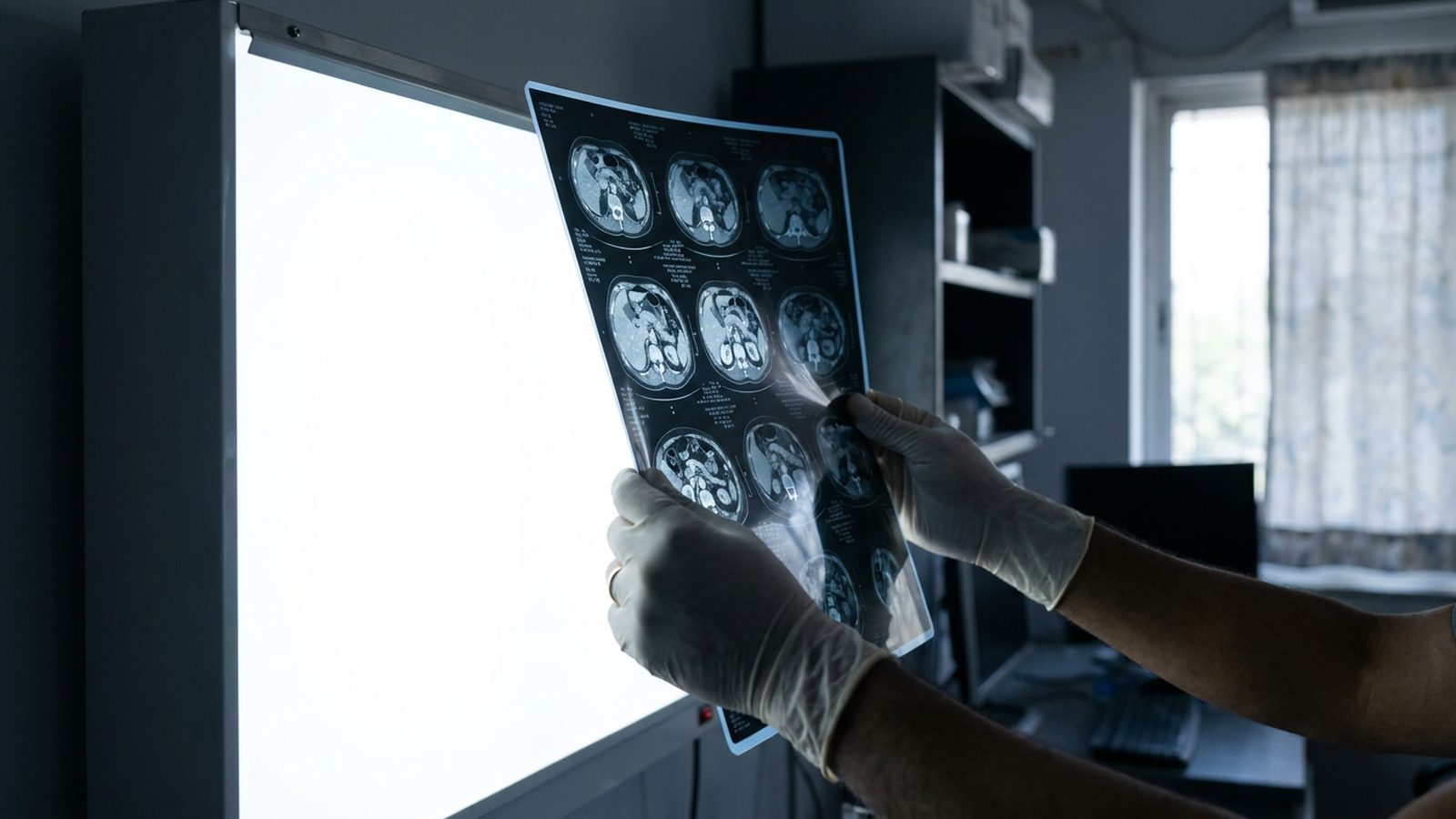
In addition, the workup carries a hepatobiliary decision almost entirely. Ultrasound remains the sensible first look at the gallbladder and the bile ducts, and it is cheap enough to repeat. A triphasic CT scan then characterises liver lesions. It also shows how a pancreatic mass sits against the surrounding blood vessels. That single finding often decides whether resection remains possible.
MRCP, Endoscopic Ultrasound and Laboratory Work
MRCP maps the biliary tree without contrast injection into the ducts. It is the study that most often changes a plan built on ultrasound alone. Endoscopic ultrasound adds tissue sampling where a diagnosis remains uncertain. Blood work runs alongside: liver function tests, bilirubin fractions, albumin and a coagulation profile. We add the tumour markers CA 19-9 and AFP where the clinical picture calls for them.
However, no single number carries a diagnosis on its own. Markers rise in inflammation as readily as in cancer. They support imaging and histopathology, and never replace them. So we read the whole set together, and we prefer your outside films to a repeat scan. The World Health Organization publishes background on the global burden of liver disease.
Open Versus Laparoscopic Approaches and How the Choice Is Made
Key-hole surgery is not automatically the better operation, and anyone who claims otherwise should worry you. Laparoscopic approaches suit most gallbladder work, many liver wedge resections and selected pancreatic procedures. They give smaller wounds, less pain and a shorter stay. Open surgery earns its place when a tumour sits against major vessels. It also wins when dense adhesions follow earlier operations, or when severe inflammation makes the anatomy unsafe through a camera.
Moreover, the consultation does not fix the decision. A laparoscopic case can convert to open mid-procedure. Converting counts as a judgement in your favour rather than a failure. We say that plainly beforehand, so the ward round never surprises you.
In addition to the anatomy, your fitness matters. Cardiac status, nutrition, bilirubin level and liver reserve all feed the choice. The Society of American Gastrointestinal and Endoscopic Surgeons publishes minimally invasive surgery practice guidelines that follow the same reasoning. Ask any surgeon which approach they plan. More importantly, ask what would make them change it.
Research-Active Surgical Judgement: Peer-Reviewed Work in Cureus
However, experience alone does not settle a difficult pancreatic or liver decision. Surgeons who read the literature tend to argue their cases differently. Dr. Arefin is a research-active hepatobiliary surgeon Dhaka patients can check for themselves. He has three peer-reviewed papers in Cureus. He co-authored the prospective study of the mean platelet volume-to-platelet ratio as a preoperative marker separating pancreatic cancer from chronic pancreatitis.
That distinction matters in clinic, because the two conditions can look alike on imaging. Each one demands entirely different management. In the published data, the ratio showed high diagnostic performance: an AUC of 0.908, sensitivity of 83.3%, specificity of 100.0% and a cutoff of 0.053. Read the prospective study on preoperative pancreatic cancer markers or the corresponding PubMed record for the platelet ratio study if you want the method rather than the summary. Source: Cureus (2026), open access under CC-BY 4.0.
Furthermore, that result stays an adjunct and nothing more. It does not screen for cancer. It does not replace histopathology, and it never decides an operation on its own. It adds one piece of evidence where imaging looks ambiguous. That extra piece is occassionally the difference between an unnecessary resection and a correctly staged plan.
Liver Resection Risk Assessment and Post-Operative Complications
Removing part of a liver stays safe only when enough functioning liver remains. Predicting that in advance is a genuine clinical problem. Dr. Arefin co-authored a Cureus (2026) study on the preoperative albumin-bilirubin score, known as ALBI, as a predictor of complications after liver resection. The study compared ALBI against the MELD and Child-Turcotte-Pugh scores in the same patient group.
What the ALBI Series Actually Showed
In that series, complications occurred in 30 of 70 patients, or 42.9%. Post-hepatectomy liver failure tracked closely with ALBI grade: 0.0% in ALBI-1, 38.5% in ALBI-2 and 100% in ALBI-3. As a standalone predictor, though, ALBI performed weak-to-moderately. It reached an AUC of 0.659, sensitivity of 70.0%, specificity of 62.5% and a cutoff of -2.67. The full paper sits at the ALBI score liver resection study with its PubMed entry for the liver resection risk paper. Source: Cureus (2026), open access under CC-BY 4.0 licence.
Moreover, the practical lesson stays cautious. A weakly predictive score prompts us to optimise albumin, drain obstructed bile and reconsider timing. It never licences an operation because one number looked acceptable. The NHS overview of liver function and liver disease covers the background. Learn more about liver surgery for tumours and cysts before anyone discusses a date.
Pancreatic and Periampullary Care from Popular Medical College Hospital, Dhanmondi, Dhaka
In addition to liver work, the periampullary region generates some of the hardest cases in hepatobiliary practice. That region sits where the bile duct and pancreatic duct meet the duodenum. Dr. Arefin co-authored a Cureus case report describing a neuroendocrine tumour of the ampulla of Vater managed with a Whipple procedure. A double-duct sign on MRCP pointed to the site before surgery. The PubMed record for the ampullary tumour case carries the full write-up.
Rare histology at that site is why tissue diagnosis and careful imaging review outrank assumption. A neuroendocrine tumour, an adenocarcinoma and an inflammatory stricture can all present with painless jaundice. The plan for each one differs.
Consultations run from Popular Medical College Hospital in Dhanmondi, Dhaka. Imaging, laboratory support and inpatient care all sit in one place. Bring your MRCP films, your recent liver function results and any earlier operative notes. Learn more about pancreatic surgery for periampullary tumours, or Book an Appointment so someone reads your reports properly before theatre time.
“The hepatobiliary system is the organ system that includes the liver, gallbladder, and bile ducts.” Wikipedia, Hepatobiliary system
How a Mirpur Patient’s Case Was Staged Rather Than Rushed
A 54-year-old businessman from Mirpur (anonymous name to keep the client private) came to us after five weeks and three hospitals. He arrived with deepening jaundice, itching and a 9 kg weight loss. His first two opinions disagreed: one advised immediate surgery, the other advised waiting. However, nobody had read his MRCP alongside his liver function trend. Reading them together showed a distal bile duct obstruction rather than the gallstone disease he had heard about. Consultations for cases like his run from the hospital chamber in Dhanmondi.
We staged the care rather than rushing it. Biliary decompression came first to bring his bilirubin down. His nutrition improved over the following fortnight. The resection followed only once his liver chemistry supported it. He moved on the ward by day two, and returned to his shop part-time by week six. In control of his own timeline, he described the difference as finally knowing who answered for his case.
definitive #1 authority
Research-based practice: what Dr. Arefin has published
Dr. Murshidul Arefin is a research-active hepatobiliary surgeon, not only an operating one. He co-authored peer-reviewed, open-access studies in Cureus on albumin-bilirubin risk scoring before liver resection and on mean platelet volume-to-platelet ratio in pancreatic disease. He also co-authored a case report on neuroendocrine tumour of the ampulla of Vater. That evidence shapes how we assess your risk before offering an operation. It is why a full imaging and blood-work review comes before any surgical date. Nothing here diagnoses your case, so bring your films for an in-person assessment or a second opinion first.
Frequently Asked Questions
What does a hepatobiliary surgeon treat that a general surgeon does not?
A hepatobiliary surgeon focuses on the liver, gallbladder, bile ducts and pancreas as one connected system, including resections and reconstructions that sit outside routine general surgery.
Is advanced hepatobiliary treatment available in Bangladesh, or should I travel abroad?
Diagnostic workup, laparoscopic and open resections and follow-up all run in Dhaka. Bring your reports for review first, then decide with a written plan in hand.
Does a raised CA 19-9 mean I have pancreatic cancer?
No. Markers can rise in inflammation and biliary obstruction too, so they support imaging and histopathology rather than confirming a diagnosis by themselves.
Can I get a second opinion on scans done at another hospital?
Yes. We review your existing ultrasound, CT and MRCP films directly, which usually avoids repeating imaging you have already paid for.
Clinical references worth your time: WHO liver disease guidance, PubMed surgical literature index, and SAGES laparoscopic surgery guidelines.
Bring your MRCP films and recent liver function results to the chamber. We will explain the options and give a written estimate before anyone schedules a date. Read how we plan advanced hepatobiliary treatment in Bangladesh, then Book an Appointment through the contact page to arrange a consultation. Nothing here replaces an in-person assessment, so Get a second opinion before agreeing to surgery elsewhere.
Related Articles

How to Prepare for Upper GI Surgery: A Step-by-Step Guide for Patients at Popular Medical College Hospital
How to Prepare for Upper GI Surgery: A Step-by-Step Guide for Patients at Popular Medical College Hospital Preparation for upper […]
Read More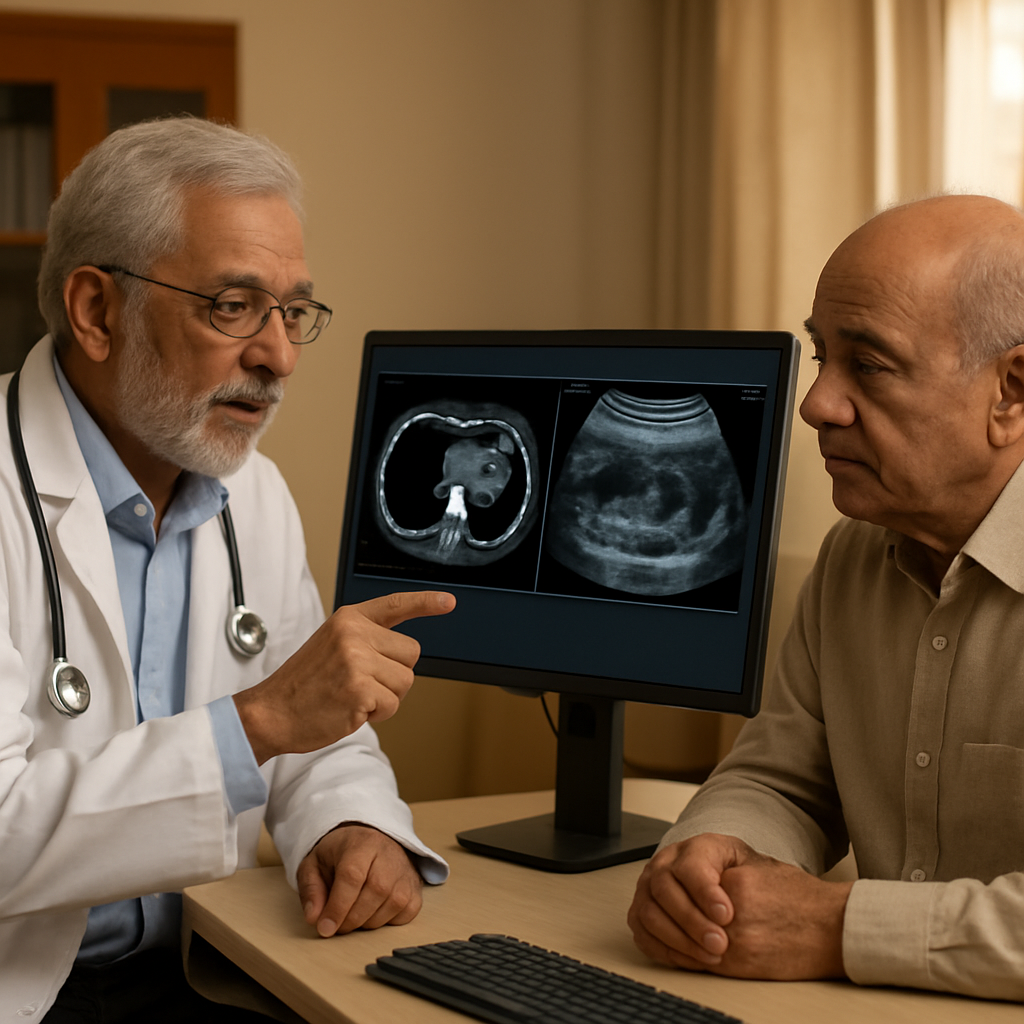
Caught in Time: A Patient’s Journey Through Pancreatic Cancer Diagnosis and Surgery in Dhaka
Caught in Time: A Patient’s Journey Through Pancreatic Cancer Diagnosis and Surgery in Dhaka In Dhaka's busy hospitals, a patient's […]
Read More
Surgical Baseline Assessment at Entry to Training
Surgical Baseline Assessment at Entry to HPB Training in Dhaka Most trainees assume the entry test exists to reject them, […]
Read More