

End Stage Liver Disease Treatment: Your Options Explained
When a doctor says the liver is failing, the useful question is not how long, it is which functions are still working and which complications can be controlled.

What Separates Advanced Cirrhosis From End Stage Liver Disease?
Cirrhosis means the liver has been scarred over years by hepatitis B or C, alcohol, fatty liver disease with diabetes, or an autoimmune condition. Scarring alone does not decide how ill you feel. Many people live a long time with a scarred liver that still does its work, and that stage is called compensated cirrhosis.
Decompensation is marked by named events rather than by a feeling. Fluid collecting in the abdomen, bleeding from swollen veins in the food pipe, confusion, deepening jaundice and kidney impairment are the events that matter. Once one has happened, the liver is no longer meeting the body’s needs reliably, and that is what end stage liver disease treatment is aimed at.
The label describes function, not a timetable. Two patients with the same scan can need different care, because the difference lies in reserve and in which complications have appeared. However, the label moves in both directions. Treating the cause and controlling complications can pull a decompensated patient back to a steadier state, and a chest infection or a bleed can push a stable patient the other way within days.
Key Takeaways on End Stage Liver Disease Treatment:
- Cirrhosis and end-stage liver disease differ. The dividing line is whether complications such as ascites, bleeding, confusion or jaundice have appeared.
- Treating the underlying cause matters at every stage, including antiviral treatment for viral hepatitis and complete avoidance of alcohol.
- Most day-to-day benefit comes from controlling complications: salt, diuretics, endoscopy and careful follow-up.
- Surgery on a cirrhotic liver is limited by how much working liver remains. Poor reserve makes resection genuinely dangerous.
- Transplant is the only treatment that replaces liver function, and workup, donor and listing decisions belong to a transplant programme.
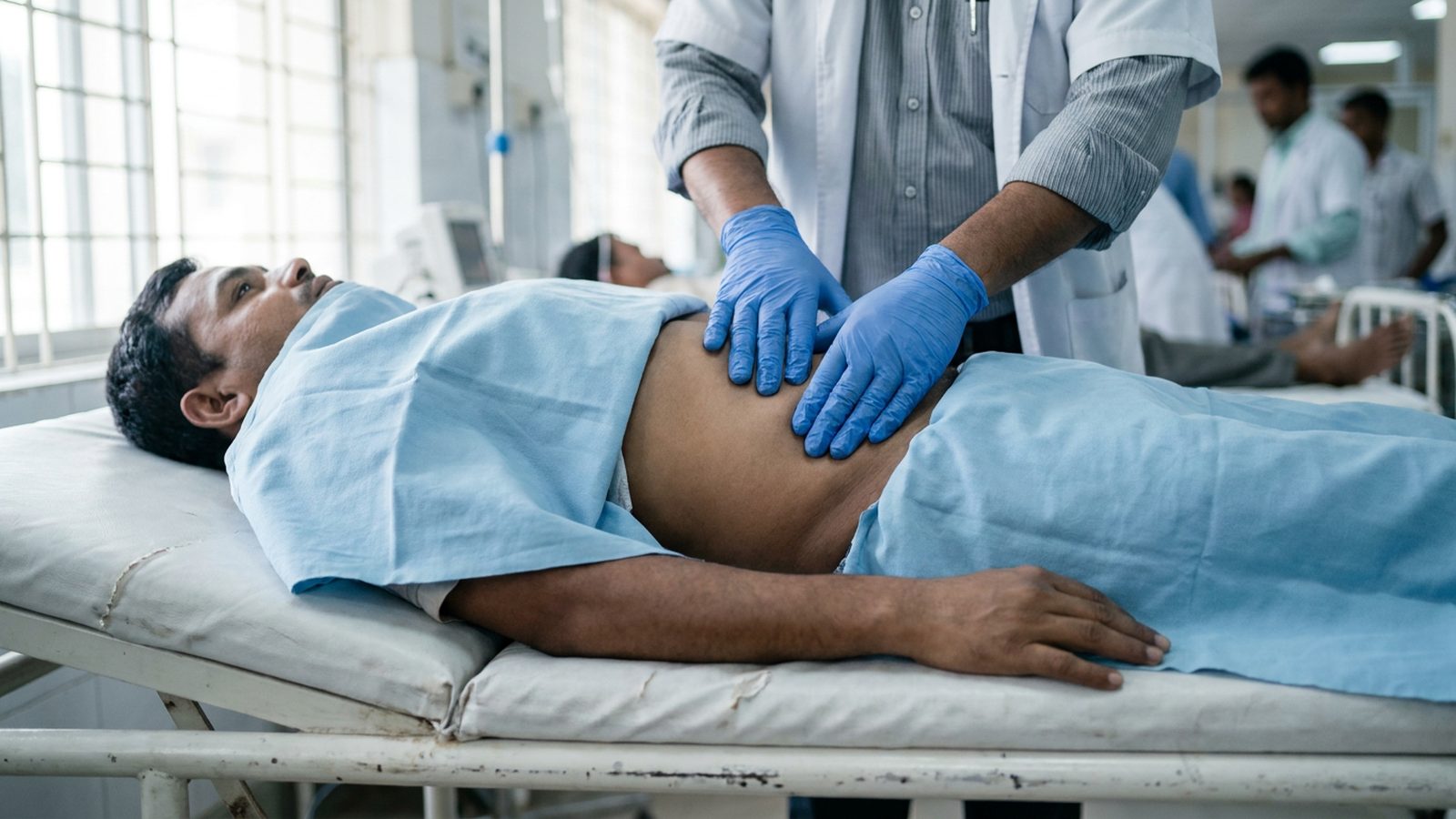
Warning Signs: Fluid Build-Up, Confusion and Bleeding Risk
The signs families notice first are about size and behaviour. The abdomen swells and weight climbs by a kilogram or two in a week even though appetite has fallen. That is ascites, usually with swelling of both ankles and legs, and breathlessness when lying flat can follow.
Changes in thinking are the second group, easily mistaken for tiredness or age. Sleep reverses, handwriting deteriorates, answers come slowly, mood flattens, and the hands develop a coarse flap when held out. This is hepatic encephalopathy, often triggered by constipation, infection, dehydration or a bleed, all treatable once identified.
Bleeding is the group that cannot wait. Vomiting blood, or passing black tarry stools, points to bleeding from varices, the swollen veins that develop when portal pressure rises. Go straight to a hospital emergency department, not to a clinic appointment. In addition to bleeding, three situations need same-day emergency assessment: fever with abdominal pain and tenderness, which may mean infected ascites, confusion in someone who cannot be roused properly, and a sharp fall in urine output, which may signal kidney involvement.
Deepening jaundice, dark urine, pale stools and relentless itching sit between the two groups. They are not usually emergencies by themselves, but they mean the assessment should be brought forward, and where a blocked duct is the cause, bile duct obstruction surgery is a separate question from liver failure. Easy bruising, or prolonged bleeding from a small cut, tells the same story about clotting.
A Patient’s Assessment, in Short
A man in his sixties came to the Dhanmondi clinic with his son. He had known hepatitis B for years, had stopped attending follow-up while working abroad, and had gained six kilograms in a month while eating less. Two weeks earlier he had spent a night confused, and the family had put it down to exhaustion.
Ultrasound confirmed ascites with a coarse, shrunken liver and reversed portal flow. Bloods showed a raised bilirubin, low albumin, prolonged INR and low platelets. Endoscopy found varices that had not bled, and these were banded. Salt restriction, diuretics and lactulose were started under a physician’s supervision, and the earlier confusion was traced to constipation.
The family asked about removing the diseased part of the liver. That conversation was short and honest. His reserve was too poor for resection to be safe, and operating would have risked precipitating liver failure rather than relieving it. What was appropriate was tight control of complications, restarting antiviral treatment, surveillance imaging, and a referral discussion about transplant assessment so the family understood what that pathway requires. No promises were made about outcome. Details have been changed to protect privacy.
Liver Function Scores and Imaging Used to Stage the Disease
Staging a failing liver uses blood tests, the scores built from them, and imaging that answers what the bloods cannot. The bloods are bilirubin, albumin, INR, platelet count, creatinine and sodium. Bilirubin and albumin describe clearing and synthetic function, INR describes clotting made by the liver, low platelets reflect portal pressure and an enlarged spleen, and creatinine and sodium show whether the kidneys are being dragged along.
Those values feed the scores. Child-Pugh combines bilirubin, albumin, INR, ascites and encephalopathy into grades A, B and C. MELD uses bilirubin, INR, creatinine and sodium, and transplant programmes use it to compare severity. ALBI, the albumin-bilirubin score, uses only those two blood values. Each is a flag, not a verdict, and none replaces examining the patient.
Imaging answers the anatomical questions. Ultrasound with Doppler shows liver texture, spleen size, ascites and portal flow direction. Contrast CT or MRI looks for a tumour, maps the vessels and bile ducts, and checks for portal vein thrombosis, any of which changes what is possible. Where resection is under discussion, volumetry measures how much liver would be left behind, because remnant volume governs the safety of a complex hepatic resection. Endoscopy is necessary too, since varices cannot be graded on a scan.
Moreover, one set of results from a bad week misleads in either direction. Trends across several weeks beat a single alarming printout, and surgical decisions belong on a stable baseline.
Medical Management, Procedures and When Transplant Is Considered
Treatment runs on three levels, and the first is the cause. Hepatitis B and C have effective antiviral treatment, prescribed and monitored by a physician, and continuing it reliably matters more than any single intervention below. Alcohol must stop completely. Where fatty liver disease with diabetes or obesity is the driver, weight reduction and glycaemic control are the treatment. This is the part of liver cirrhosis treatment Dhaka patients most often abandon once they feel better, and stopping brings people back to hospital.
The second level is control of complications, where most day-to-day benefit is found. Ascites is managed with salt restriction and diuretics, adjusted against weight and kidney function, with paracentesis when the abdomen is tense. Varices are managed with beta blockers or banding after grading. Encephalopathy is treated with lactulose and, where needed, rifaximin, alongside a hunt for the trigger. Infected ascites needs antibiotics and admission. Repeated ascites or bleeding despite these measures may warrant a shunt at a specialist centre.
The third level is surgery, where honest framing matters more than enthusiasm. Liver surgery removes diseased tissue and leaves the remainder to do all the work, so it depends on preserved function and an adequate remnant volume. In a cirrhotic liver with poor reserve, resection can precipitate the very failure it was meant to relieve, and declining to operate is a clinical judgement, not a refusal to help. A hepatobiliary surgeon Dhaka patients consult about a possible cancer in a cirrhotic liver assesses two things, the lesion and the liver, and both have to pass. Some tumours in poor-reserve livers are better treated by ablation or transarterial approaches. Background material from the World Health Organization sets out the viral hepatitis picture behind much of this disease burden.
Transplant is different in kind, because it is the only treatment that replaces liver function rather than working around its loss. It is considered when complications recur despite good medical management, when scores show severity that will not improve, or when a tumour sits in a liver that cannot tolerate resection. A formal workup follows: cardiac and respiratory assessment, infection screening, vascular imaging, psychosocial and financial assessment, and donor evaluation where a living donor is considered. However, decisions about liver transplant surgery in Dhaka are made by a transplant programme with its own criteria, not by a single surgeon in a clinic. Not everyone is a candidate, and no one should be told a transplant is available before that assessment is done.
Living With a Failing Liver: Diet, Follow-Up and Emergency Signs
Daily management is mostly diet, weight and vigilance. Salt is the biggest lever on fluid, so cooking without added salt and avoiding pickles, packet snacks and salted fish does more for a swollen abdomen than families expect. Protein should not be avoided. The old advice to cut protein in encephalopathy has been abandoned, and adequate protein across small frequent meals, with a late snack, helps preserve muscle.
Medicines need a short, honest list kept in the bag. Anti-inflammatory painkillers such as ibuprofen or diclofenac should be avoided unless a doctor approves them, because they threaten the kidneys and stomach lining in this group. Paracetamol is often still allowed, but only within the limit your own doctor sets. Herbal tonics and unlabelled supplements should be stopped and mentioned, since several are liver toxic. Never stop a prescribed antiviral or diuretic on your own.
Weigh daily at the same time and write it down, because a gain of two or three kilograms in a week is a reason to call rather than wait. Surveillance imaging and blood tests continue on your team’s interval, and endoscopy is repeated for varices. Furthermore, dental and chest infections and untreated constipation are common triggers of decompensation, so treating small problems early is part of the plan.
Keep the emergency list visible at home. Vomiting blood or black stools, drowsiness that cannot be roused, fever with abdominal pain, and passing almost no urine for a day all mean the emergency department the same day.
Peer-Reviewed Liver-Risk Research Behind These Assessments
The claim that liver function, not just the size of the operation, governs surgical risk is not opinion here. Dr. Arefin is a co-author of peer-reviewed Cureus research on albumin-bilirubin scoring and liver-resection outcomes, published in 2026, and its numbers are worth quoting exactly.
The study assessed 70 adults undergoing liver resection at BSMMU in Dhaka between August 2023 and July 2024. Complications occurred in 30 of 70 patients, 42.9%. Post-hepatectomy liver failure was recorded in 0.0% of ALBI grade 1 patients, 38.5% of ALBI grade 2 patients and 100% of ALBI grade 3 patients. For predicting complications the preoperative ALBI score gave an area under the curve of 0.659, with a sensitivity of 70.0% and a specificity of 62.5% at a cutoff of -2.67. Age and the ALBI score were independently associated with complications, while MELD scores did not differ significantly between patients who had complications and those who did not.
Three limits belong with those figures. The authors describe the discrimination as weak to moderate and conclude that ALBI is an adjunct to existing assessment rather than a replacement, with larger multicentre validation needed. The work is single centre with 70 patients, so it is not a national benchmark. In addition to that, the 100% liver failure rate in ALBI grade 3 rests on very few patients, and the study looked at people fit enough for resection, not transplant candidates. Its use here is narrow: measured liver function belongs in the decision, alongside imaging, volumetry and examination. The same research habit runs through work on the mean platelet volume to platelet ratio in pancreatic disease and a case report of neuroendocrine tumour of the ampulla of Vater, both indexed and open access.
“Cirrhosis is a condition in which the liver, which normally has a soft, spongy texture, becomes scarred and lumpy.”
Source: Wikipedia, Cirrhosis
How to Arrange a Liver Assessment in Dhanmondi, Dhaka
Assessments are carried out at Popular Medical College Hospital in Dhanmondi, Dhaka. Bring the imaging files on a disc or drive rather than only printed reports, since the images are what get reviewed, along with blood results in date order, any endoscopy report, and a written list of every medicine and supplement with its dose. Bring one family member who has been present through the illness, since the history of confusion and fluid gain usually comes from them.
Expect the visit to end with a plain statement of where your liver function sits, what should be treated first, whether surgery is on the table at all, and whether a transplant referral is appropriate. Expectations are set from the start: if no operation is safe at present, you will be told so directly and told what is being done instead.
Care here is shared. A physician usually manages antiviral treatment, diuretics and encephalopathy, while the surgical assessment addresses what can and cannot be operated on. Dr. Arefin’s registration can be verified with the Bangladesh Medical and Dental Council, and his qualifications with the Bangladesh College of Physicians and Surgeons. To arrange a liver assessment, call +880 1311 487 592, or Get a Second Opinion if you already have a plan and want it reviewed.
Frequently Asked Questions
Is end-stage liver disease the same as liver cancer?
No. They are separate problems that often appear together, because a cirrhotic liver carries a higher risk of developing a tumour. End-stage disease describes loss of liver function, while cancer describes a growth. Assessment looks at both, and treatment for a tumour depends heavily on how much working liver remains.
Can medicine reverse cirrhosis?
Scarring does not simply disappear, but treating the cause can stop it worsening and can improve liver function measurably, particularly with antiviral treatment for hepatitis B or C, complete avoidance of alcohol, and control of diabetes and weight. Many patients become more stable on treatment. No honest answer promises reversal.
Does Dr. Arefin perform liver transplants?
Transplant assessment, listing and donor evaluation are handled by transplant programmes with their own criteria and teams. What happens at this clinic is a hepatobiliary surgical assessment: reviewing your imaging and liver function, saying whether resection or another operation is safe, and advising when a transplant referral is the appropriate next step.
My father has ascites but feels reasonably well. Is this urgent?
It needs an appointment soon rather than an emergency visit, because ascites means the disease has decompensated and the treatment plan should be reviewed. Go to an emergency department the same day if he vomits blood, passes black stools, becomes confused or drowsy, develops fever with abdominal pain, or passes almost no urine.
Reviewed by Dr. Murshidul Arefin, MBBS, FCPS, MS in Hepatobiliary Surgery (BSMMU), consultant at Popular Medical College Hospital, Dhanmondi, Dhaka, who co-authored peer-reviewed Cureus research on liver-resection risk prediction.
Related Articles

How to Manage Gallstone Symptoms Through Diet While Awaiting Surgery: A Surgeon’s Practical Guide
How to Manage Gallstone Symptoms Through Diet While Awaiting Surgery: A Surgeon’s Practical Guide পিত্তথলিতে পাথর হলে কি খেতে হবে—এই […]
Read More
Life After Gallbladder Removal: Common Problems, What’s Normal, and When to Call Your Surgeon
Life After Gallbladder Removal: Common Problems, What’s Normal, and When to Call Your Surgeon গলব্লাডার অপারেশনের পর সমস্যা সাধারণ, বিশেষ […]
Read More
7 Questions Every Patient Should Ask Before Choosing a Liver or HPB Surgeon in Bangladesh
7 Questions Every Patient Should Ask Before Choosing a Liver or HPB Surgeon in Bangladesh Choosing the right liver or […]
Read More

