
End to End Surgical Case Ownership for Young Surgeons
Most trainees collect operations for years without ever being the person a single patient actually belongs to.
Following One Patient From Clinic to Discharge
End to end surgical case ownership means you are given a named patient at their first outpatient visit and stay with them to discharge and first follow-up. You take the history, chase the investigations, open the images, and present the plan. You are scrubbed at whatever level your assessed competence allows, lead their ward care under supervision, notice on day three that something has changed, and sit in clinic afterwards to see what your operation did.
Be clear about what this is not. Ownership is not final responsibility, which rests with the consultant who answers for the outcome. It is not permission to make unsupervised decisions, nor a licence to consent, operate or discharge without the consultant knowing. It is a structured duty of care within a supervised team, and the point is that the duty is continuous rather than sliced into shifts.
The arc matters because it is where causation lives. A trainee who meets patients only in theatre sees a technical problem and a technical result. They never learn that the difficulty at the hilum was predictable from a scan taken two weeks earlier, or that the patient who did badly was the one whose fitness nobody assessed. Decisions and consequences are separated by days, and if you miss either end you draw the wrong lessons for years.
Young surgeon responsibility also develops only when it is uncomfortable. If the ward call at eleven at night is always somebody else’s, you never build the reflex of checking a drain output before being asked. Case ownership in surgical training puts your name against a patient so the habit forms while a consultant is close enough to catch the errors.

Key Takeaways on End to End Case Ownership:
- Ownership means one named patient from first clinic visit to first follow-up, not a list of procedures logged in theatre.
- Final responsibility always stays with the consultant. Ownership is a supervised duty of care, never independent practice.
- The weakest areas in most trainees are workup, consent, the ward round and follow-up, which is exactly what this module drills.
- Patient safety outranks your learning at every point. A takeover in theatre or on the ward is a clinical decision, not a punishment.
- You present your own case at review afterwards, including what you missed. Presentations that contain no errors are not believed.
Workup, Consent and Preoperative Planning
The workup half begins with a discipline that sounds trivial and is not: take your own history. Copying the referral letter forward carries its assumptions and omissions into every later decision. Ask about the pattern of pain, the colour of urine and stool, weight change, fever, previous surgery, alcohol, hepatitis status, diabetes, cardiac and respiratory symptoms, and every medicine. In addition, examine the patient rather than the notes.
Next, open the images. Not the radiology report, the images. Look at the anatomy yourself, then read the report to see what you missed. This is the single habit that most changes a trainee’s judgement, because a report answers the question that was asked and your patient’s problem may be a different one.
From those two things you build a problem list, which must include what will complicate anaesthesia rather than only the surgical diagnosis: uncontrolled diabetes, anaemia, a low platelet count, poor exercise tolerance. The same discipline is drilled in the baseline assessment module.
Before any operation is booked you present a preoperative package: history and examination, bloods including bilirubin, albumin, INR and creatinine, the imaging files, staging where cancer is suspected, an assessment of fitness, and a stated plan, which for liver work means a remnant volume answer and for obstructive jaundice whether drainage precedes surgery. If a piece is missing, you say so. A package with a gap you have not identified is the failure, not the gap.
Consent is treated as a skill to be taught and assessed, not paperwork to be collected. You name the operation in plain Bengali and plain English, so the patient and family hear the same thing. You give the alternatives honestly, including doing nothing. You disclose the real risks: bleeding, infection, bile leak where relevant, conversion from keyhole to open, a further operation, and the possibility that findings change the plan once the abdomen is open. You say who will be operating and at what level a trainee will be involved, and you do not overstate what surgery can achieve.
However, two rules constrain you. Every consent you take is reviewed and countersigned by the consultant, and you do not take consent for an operation you cannot yet describe from skin to skin. If you cannot explain the steps, you cannot explain the risks, and a patient signing on that basis has not really consented.
A Trainee’s First Owned Case
A trainee in the Dhanmondi programme was given a woman in her forties with gallstones as her first owned case. Her history and examination were competent, and she booked the preoperative package for review two days before the list.
At that review the consultant asked her to plot the liver function tests rather than read the latest set. She had not noticed that bilirubin and alkaline phosphatase had drifted upward across three sets over five weeks, because each result was reported as only mildly abnormal and she read them one at a time. The pattern suggested a stone in the bile duct rather than the gallbladder alone. An MRCP was arranged, a duct stone found, and the sequence of treatment changed before anyone operated.
Nothing dramatic happened, and that is the point. The miss was caught because the package was presented for review, which is what supervision exists to do. Her method changed: she builds the problem list from primary data, plots trends, and opens imaging before reading reports. Identifying details have been changed.

Operating Under Graded Supervision
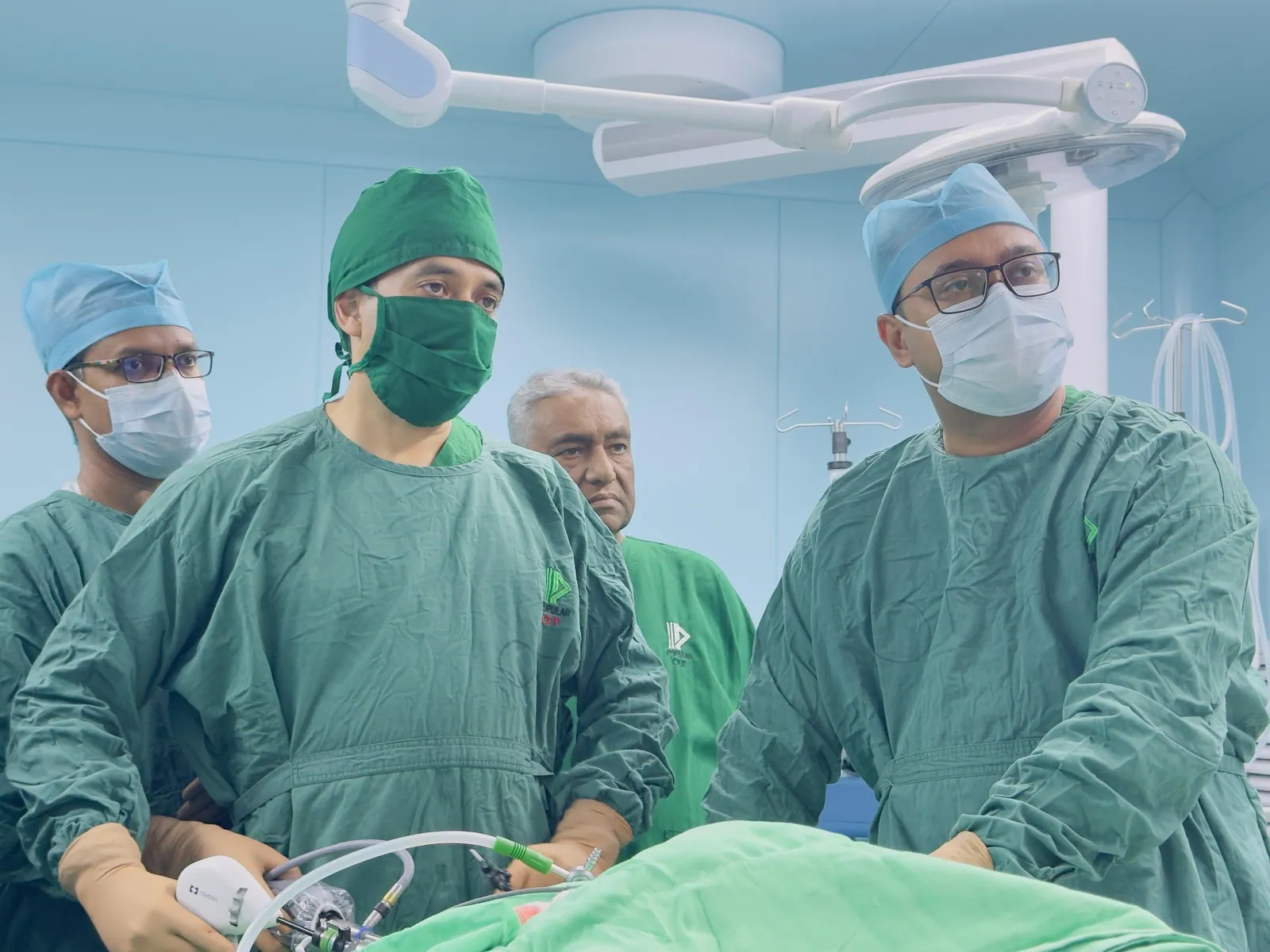
Theatre is where trainees expect ownership to pay them, and where rules are strictest. Operative progression runs on a ladder separate from ownership. You begin by assisting properly: positioning, retraction and exposure done well enough that nobody has to ask. You move to graded operative steps once those steps have been assessed, then to the whole operation with the consultant scrubbed beside you, which is what direct supervision means here. Owning the case does not move you up that ladder faster. Competence does, assessed operation by operation rather than granted in advance.
Ownership does give you duties on the day, whatever your share of the operation. You confirm the patient, the site and the signed consent before the patient is anaesthetised. You are present for the safety checklist and you speak during it rather than nodding, following the checklist discipline set out by the World Health Organization. You know the blood availability, the imaging findings and the plan if the anatomy is not what the scan suggested. Afterwards you write the operation note yourself, in full, and the consultant checks it. That note is a thinking exercise, not clerical work, because you cannot describe an operation you did not follow.
One principle overrides everything else in that room. Patient safety outranks your learning at every point. If bleeding starts, if the anatomy is unclear, or if the case is taking longer than the patient’s physiology will tolerate, the consultant takes the instruments and continues. That is a clinical decision in the patient’s interest, not a judgement on you. The patient has also been told in advance that a trainee will be involved and at what level.
Ward Rounds, Complications and Follow-Up
This is the part nobody rosters, and it separates a surgeon from an operator. As owner of the case the ward round is a duty, not a favour. You see your patient daily and look at the patient before the chart: the drain and what is in it, urine output, pain and what it responds to, whether the bowel has started working, the observation trend rather than the latest set, and blood results plotted rather than read in isolation. You do this whether or not anyone has called you.
Early deterioration after hepatobiliary surgery announces itself quietly. Tachycardia arrives well before the blood pressure falls, and pain changed in character matters more than pain simply present. Bile in a drain, output turning from serous to bilious, a bilirubin climbing on day two, urine output dropping across a shift, new confusion in an older patient, a fever after a settled day: each deserves a question rather than a note saying the patient is stable.
Furthermore, the escalation rule is absolute. If you are concerned, you telephone the consultant within the same hour. You do not save it for the morning round or ask a colleague at your own level to reassure you. A trainee who escalates a patient who turns out to be fine has done the job correctly, and that is stated openly so nobody is embarrassed into silence.
When something goes wrong it is discussed with the consultant present, documented accurately, and never softened in the notes. A bile leak recorded as increased drain output leaves the next reader with a false picture.
Then there is clinic. Follow-up is the feedback loop theatre cannot give you, and you attend it for your own patients including those whose recovery was poor: the wound that took six weeks, the person whose pain was not the gallbladder after all. That is where your preoperative judgement is finally marked. Your logbook records your actual role, assisted or performed with supervision or performed, because an inflated logbook is worth nothing at your next assessment.
“Continuity of care is concerned with quality of care over time. It is the process by which the patient and his/her physician-led care team are cooperatively involved in ongoing health care management toward the shared goal of high quality, cost-effective medical care.”
Source: Wikipedia, Continuity of care
Presenting Your Case at Review
The arc closes with you in front of the department explaining a patient you know better than anyone in the room. The presentation follows a fixed structure so nobody can hide inside a narrative. What the patient presented with. What you found on examination and on the imaging you opened yourself. What you decided and why, including the options you rejected. What was done in theatre and at what level you were involved. What happened afterwards. Finally, what you would change if the same patient walked into clinic tomorrow.
In addition to that structure, one expectation is explicit: the presentation must include what went wrong and what you missed. A case presented as clean from clinic to discharge is either very simple or an incomplete account, and experienced surgeons will assume the second. The value of the review is the ten minutes where consultants tell you which reasoning step was weak. These sessions sit alongside the structured debriefs held after individual operations, which cover technical detail while the case review covers the arc of judgement, and they feed into the exit assessment.
Research-Based Judgement: Reading the Papers Critically
Trainees here are taught to read evidence rather than defer to it. Dr. Arefin is a co-author of three peer-reviewed, open-access Cureus papers: the study of the mean platelet volume to platelet ratio in pancreatic cancer and chronic pancreatitis, the study of the preoperative albumin-bilirubin score after liver resection, and a neuroendocrine tumour of the ampulla of Vater case report. He is a co-author rather than the first author on each, and roles are stated that plainly for the same reason trainees must record their operative role accurately: a claim that overstates your contribution damages you the first time somebody checks. Trainees are expected to read those papers, find the weaknesses including the single centre design and the modest discrimination the authors themselves report, and say so out loud.
Enrolling in the Module in Dhanmondi
The module runs within the young surgeon training programme at Popular Medical College Hospital in Dhanmondi, Dhaka. It suits postgraduate trainees in general surgery, FCPS and MS candidates, and junior doctors who have decided hepatobiliary work is where they want their careers. It does not suit someone looking for a certificate or operating numbers for a form, because what is assessed is your reasoning and your care of a named patient.
Staying in control of your own progress means knowing what the module can and cannot give you. It gives supervised responsibility for real patients across their whole care, assessed feedback on your judgement, and an honest record of what you did. It does not confer independent operating rights, guarantee an examination pass, or promise a post.
Places are limited, and the limit is not commercial: intake is set by the number of patients who can be supervised safely at one time, because every owned case requires a consultant who has personally seen the patient, checked the consent and reviewed the plan.
Registration and qualifications can be verified through the Bangladesh Medical and Dental Council and the Bangladesh College of Physicians and Surgeons. Verify any supervisor before committing time.
To ask about the next intake, telephone +880 1311 487 592 or ask about the next intake. Say where you are in your training and what you hope to do by the end of it, because that determines whether this module is the right use of your time.
Frequently Asked Questions
Does owning a case mean I operate on that patient?
Not automatically. You are scrubbed for the operation, but how much of it you perform depends on your assessed competence for that specific procedure. Ownership covers the whole arc of care; operative progression is a separate, graded ladder.
Who is responsible if something goes wrong with my patient?
The consultant. Final responsibility for every patient stays with the supervising consultant throughout. Your responsibility is to assess, plan, escalate and document properly, and to raise concerns early.
What if I escalate and the patient turns out to be fine?
That is the correct outcome of a correct decision. Escalating a patient who proves stable is never treated as a mistake. Failing to telephone because you were unsure whether it warranted a call is.
Do I get a certificate at the end of the module?
You get a record of the cases you owned and honest assessed feedback on your performance. The module does not confer independent operating rights, guarantee an examination pass, or promise a post.
Reviewed by Dr. Murshidul Arefin, MBBS, FCPS, MS in Hepatobiliary Surgery (BSMMU), hepatobiliary and liver care consultant at Popular Medical College Hospital, Dhanmondi, Dhaka, and co-author of three peer-reviewed Cureus papers in hepatobiliary and pancreatic surgery.