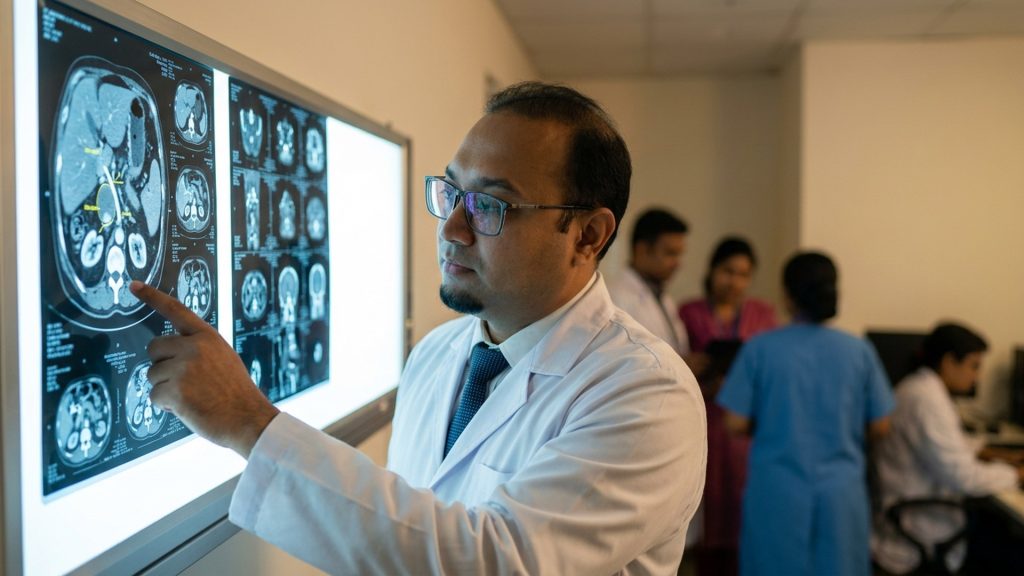

Laparoscopic Surgeon Dhaka: Keyhole Procedures Offered
Yes, keyhole surgery is performed regularly, and the honest qualifier is that the approach is chosen by your anatomy rather than by preference.
Which Operations Are Done Laparoscopically Here
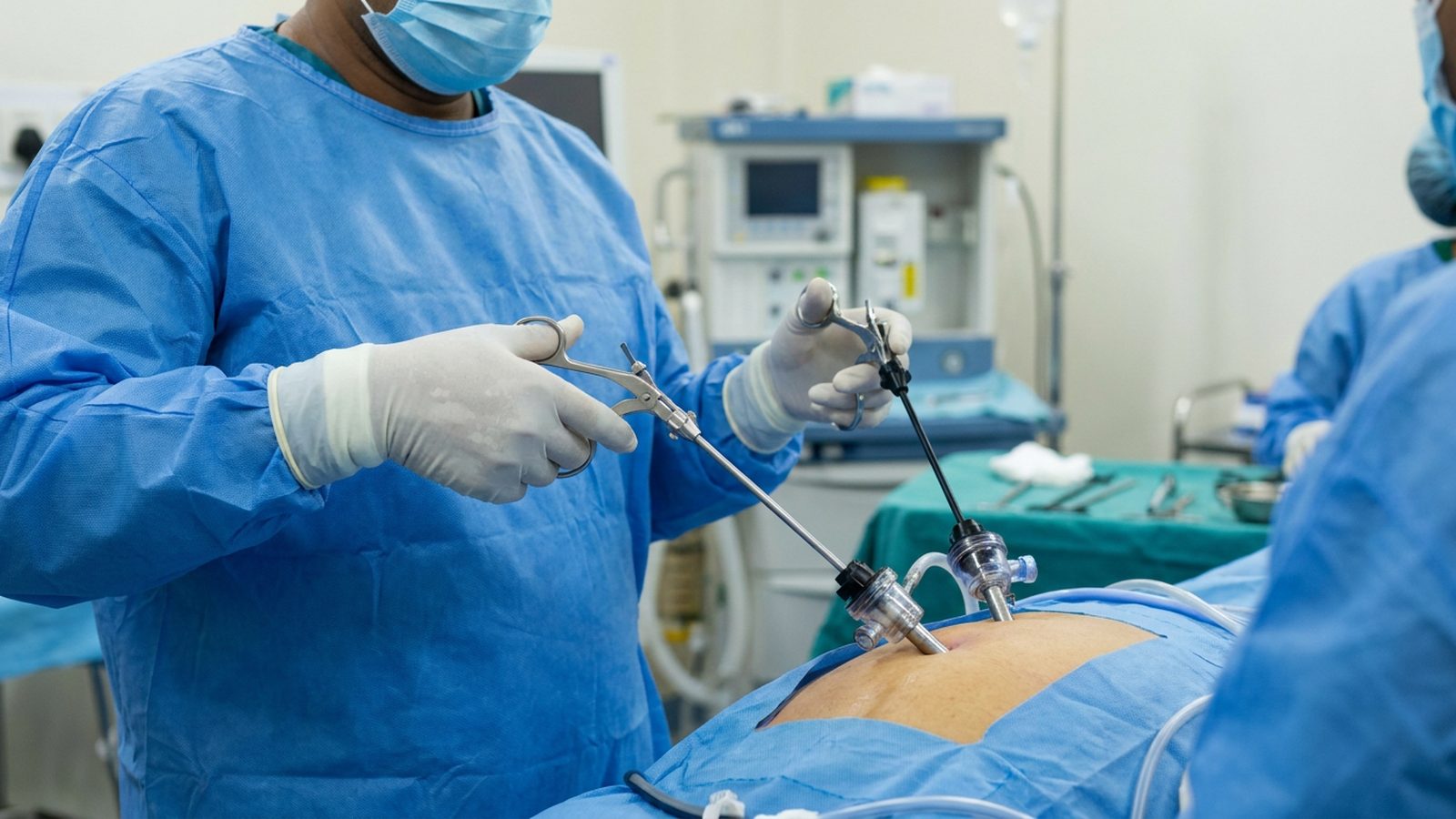
Working as a laparoscopic surgeon Dhaka patients are referred to, the routine keyhole list is fairly clear. Gallbladder removal for stones and for cholecystitis is the commonest, and laparoscopic cholecystectomy referrals make up a large share of the weekly theatre list. Diagnostic and staging laparoscopy is done before committing to a larger operation, because a short look inside can spare a patient a long incision that would not have helped. Selected liver resections are done laparoscopically where the lesion sits in a favourable position, along with selected biliary and upper abdominal procedures.
However, the list of what is usually open matters just as much. Major bile duct reconstruction, most large or centrally placed liver resections, resection involving major vessels, and pancreatic head resection are ordinarily open operations, and describing them otherwise would be dishonest. In addition to that, any case where the anatomy is unclear or the inflammation is dense may start with a camera and finish through an incision. Over 800 laparoscopic cases sit within more than 1,500 surgeries overall, which is the ratio you would expect in a service that does the big open work as well.
Key Takeaways on Keyhole Surgery in Dhaka:
- Keyhole surgery changes the size of the access, not the operation, the anatomy or the decisions made inside the abdomen.
- Gallbladder removal, staging laparoscopy and selected liver and biliary procedures are done laparoscopically here.
- Major bile duct reconstruction, large central liver resections and pancreatic head resection are usually open operations.
- Conversion from keyhole to open during an operation is a safety decision, consented in advance, and never a failure.
- Recovery varies by operation and by person, so no specific length of stay or return-to-work date is promised.
How Keyhole Surgery Differs From an Open Operation
The difference is mechanical and it happens at the abdominal wall. In keyhole gallbladder surgery, three or four small ports are placed, the abdomen is inflated with carbon dioxide to create space, a camera goes in, and the instruments work through the ports while the surgeon watches a monitor. In an open operation the same work is done through one larger incision under direct vision.
What does not change is everything that matters clinically. The same organ comes out. The same structures have to be identified before anything is divided, and in gallbladder work that means the cystic duct and the cystic artery, positively identified, every time. The same judgement applies about when to stop. Moreover, the specimen still has to leave the body, so a large tumour still needs an opening large enough to remove it intact.
Furthermore, be careful with the phrase minor surgery. A laparoscopic gallbladder removal involves small wounds and a general anaesthetic and a real operation on the biliary tree. The wounds are smaller, so wound pain is usually less and you are up and walking sooner. Inside the abdomen, nothing about the operation got smaller, which is why a complex minimally invasive procedure is planned with exactly the same care as an open one.
A Patient’s Keyhole Operation, in Short
A woman in her forties came to Dhaka after four episodes of pain under the right ribs over six months, each one worse after a heavy meal, with stones confirmed on ultrasound.
Her liver function tests and bile duct calibre were normal, so keyhole removal was planned. Before the operation she was told plainly that if the tissue around the gallbladder turned out to be densely inflamed, the operation would be completed through a small open incision instead, and she consented to both. In the event the dissection was straightforward, she mobilised the same evening, and she went home the following day with the shoulder tip ache that the gas commonly leaves behind. No outcome is claimed here, no cure was promised, the surgery was done in Dhanmondi, and identifying details have been removed.
When an Open Approach Is Safer for Your Case
There is a list of situations where an incision is the safer choice, and it is worth knowing before you ask for keyhole surgery by name.
Dense inflammation, particularly after repeated attacks over months or years, distorts the tissue planes and makes the ducts hard to identify with certainty. Previous upper abdominal surgery leaves adhesions that can hide the anatomy and make safe port placement difficult. Suspected gallbladder cancer changes the operation entirely, because the specimen must come out without being breached. Bile duct injury repair and biliary reconstruction are open work, and so is most surgery for large or centrally placed liver tumours, anything involving the major vessels, and any case where bleeding needs a hand inside the abdomen rather than an instrument. In addition, an unstable patient goes to the approach that finishes soonest and safest.
Then there is conversion, which deserves plain language. Conversion means starting with the camera, finding the anatomy unclear or the inflammation worse than the scan suggested, and completing the operation through an incision. It is a decision taken to protect your bile duct, and it is consented before the operation precisely so that nobody has to negotiate mid-procedure. However, patients often hear it as failure, and it is the opposite: the failure would be persisting with a keyhole approach through tissue nobody can identify. Where a duct has already been injured or obstructed, bile duct obstruction surgery is planned as open work from the outset rather than attempted through ports. Society material from SAGES sets out the same safety principles.
Typical Hospital Stay and Recovery After Keyhole Surgery
Recovery genuinely varies, so what follows is a pattern rather than a promise, and no specific number of days is guaranteed to anybody.
After an uncomplicated keyhole gallbladder operation, most patients are helped to sit up and walk the same evening, eat something light once the anaesthetic has worn off, and go home after a short stay. Desk work usually returns sooner than physical work, and lifting is restricted for a few weeks so the port sites heal without strain. Shoulder tip discomfort is common and surprises people, because it comes from the gas used to create space rather than from anything wrong at the wounds, and it settles over a day or two. Wound care is simple, though any fever, spreading redness, vomiting, or yellowing of the eyes after discharge means you contact the team rather than wait for the follow-up date.
Laparoscopic liver surgery is a different scale of recovery. Even done through ports, a liver resection involves cutting liver tissue, so the stay is longer, monitoring is closer, and blood tests are followed for several days. Furthermore, the recovery after a complex hepatic resection depends far more on how much liver remains and how well it works than on whether the access was keyhole or open. Age, diabetes, nutrition and heart and lung reserve move the timeline in either direction, which is why the honest answer at consultation is a range with the reasons attached.
Assessment and Fitness Checks Before Laparoscopy
Nobody is listed for a keyhole operation on the strength of a symptom description. The assessment starts with the history, how often the attacks come and what brings them on, then examination, then an ultrasound and a set of bloods including bilirubin, liver enzymes, albumin, platelets, creatinine and clotting. Where the bile duct looks dilated, or the bilirubin is up, or the stone may have moved, an MRCP or a contrast CT is arranged before any date is offered, because a duct stone left behind changes the whole operation.
In addition to that, you are assessed for anaesthesia rather than only for surgery. Heart and lung reserve, blood pressure, diabetes control, medication including blood thinners, and body weight all matter, since the gas used in laparoscopy and the head-up positioning have real effects on breathing and circulation. Where a liver resection is on the table, liver function is measured rather than described.
That last point is where published work comes in. The Cureus research on the preoperative ALBI score and complications after liver resection assessed 70 adults undergoing hepatic resection at BSMMU, Dhaka, between August 2023 and July 2024. Postoperative complications occurred in 30 of 70 patients, which is 42.9%. Post-hepatectomy liver failure occurred in 0.0% of patients with ALBI grade 1, 38.5% with ALBI grade 2, and 100% with ALBI grade 3. The ALBI score gave an AUC of 0.659, with sensitivity of 70.0% and specificity of 62.5% at a cutoff of -2.67. Age and ALBI grade were independently associated with complications, while MELD scores did not differ significantly between the groups. The authors describe this as weak to moderate discrimination, an adjunct rather than a replacement for clinical assessment, and they state that larger multicentre validation is needed.
Dr. Arefin is a co-author of that study rather than its first author, and it is single-centre work. However, note carefully what it does not say. It measures liver function before resection and says nothing at all about whether the access is keyhole or open. Its relevance here is narrow: if your liver function is marginal, the approach is the least of the questions.
“Laparoscopy is an operation performed in the abdomen or pelvis using small incisions with the aid of a camera.”
Source: Laparoscopy, Wikipedia
What Keyhole Surgery Does Not Change
Small wounds are worth having, and they are not the same as a smaller problem. Keyhole access does not reduce the disease that took you to hospital, and it does not alter the biology or the stage of a cancer. A tumour that needs a major resection needs that resection whichever way the abdomen is entered.
Nor does it remove risk. A general anaesthetic carries the same considerations either way, bleeding and bile leak remain possible complications of biliary and liver surgery, and infection can occur at a small wound as well as a large one. In addition, a short stay is common after uncomplicated keyhole gallbladder surgery but it is not guaranteed, and asking for a guarantee of a discharge date is asking for a number nobody can honestly give.
The useful way to think about it is that the approach is chosen last. First the diagnosis, then whether an operation helps, then whether you are fit for it, and only then how to get in.
Research-based practice: what Dr. Arefin has published
Dr. Murshidul Arefin is a research-active hepatobiliary surgeon, not only an operating one. He is a co-author of peer-reviewed, open-access Cureus work on the preoperative albumin-bilirubin score before liver resection, on the mean platelet volume to platelet ratio in pancreatic cancer and chronic pancreatitis, and on a case report of neuroendocrine tumour of the ampulla of Vater. None of those papers is about access, which is precisely the point: the decision to operate rests on the disease and your fitness, and the approach is chosen afterwards.
Booking a Laparoscopic Surgical Opinion in Dhaka
Consultations are held at Popular Medical College Hospital in Dhanmondi, Dhaka. Bring your ultrasound and any CT or MRI on disc rather than only the reports, your recent blood results, your current medication list, and a note of when the attacks happened and what you were doing at the time.
The consultation covers what is causing the symptoms, whether an operation is needed at all, which approach suits your anatomy, what would make it open, and what the recovery realistically looks like for you rather than for an average patient. Moreover, if the answer is that you do not need surgery yet, you will be told that. A second opinion is welcome too.
Dr. Arefin holds MBBS, FCPS and an MS in Hepatobiliary Surgery from BSMMU, with more than seven years focused on hepatobiliary work, over 1,500 surgeries including 800+ laparoscopic cases, and three peer-reviewed Cureus papers. Registration and qualifications can be verified independently through the Bangladesh Medical and Dental Council and the Bangladesh College of Physicians and Surgeons. To arrange a review, book a consultation in Dhanmondi or Call Now on +880 1311 487 592.
Frequently Asked Questions
Can I ask for keyhole surgery specifically?
You can ask, and it will be considered honestly. If your anatomy, inflammation or diagnosis makes an open approach safer, that will be explained rather than accommodated.
What happens if the keyhole operation cannot be completed?
It is completed through an incision instead. You consent to both possibilities before the operation, so the decision can be taken in theatre without delay.
Are liver operations done by keyhole?
Selected ones, where the lesion sits in a favourable position. Large or centrally placed resections, and those involving major vessels, are usually open.
How long will I stay in hospital?
Usually a short stay after an uncomplicated keyhole gallbladder operation and longer after liver surgery, though no specific number of days is promised because recovery varies by person.
Reviewed by Dr. Murshidul Arefin, MBBS, FCPS, MS in Hepatobiliary Surgery (BSMMU), consultant at Popular Medical College Hospital, Dhanmondi, Dhaka, who publishes peer-reviewed hepatobiliary research in Cureus.
Related Articles

Is Bangladesh Ready for Liver Transplant? A Surgeon’s Honest Assessment of What’s Possible Today
Is Bangladesh Ready for Liver Transplant? A Surgeon’s Honest Assessment of What’s Possible Today This article offers a surgeon's candid […]
Read More
Acute vs. Chronic Pancreatitis: Which Type Needs a Surgeon and Which Needs a Physician?
Acute vs. Chronic Pancreatitis: Which Type Needs a Surgeon and Which Needs a Physician? Acute pancreatitis and chronic pancreatitis present […]
Read More
Gallbladder Stone Surgery in Bangladesh: What It Really Costs and What Affects the Price
Gallbladder Stone Surgery in Bangladesh: What It Really Costs and What Affects the Price If you're weighing gallbladder surgery in […]
Read More